Team selection · Reviewed August 2026

What Should an Outdoor Estate Receive at Commissioning & Turnover?

An owner-side closeout standard for testing, training, as-builts, warranties, controls, seasonal procedures, landscape establishment, and unresolved work.

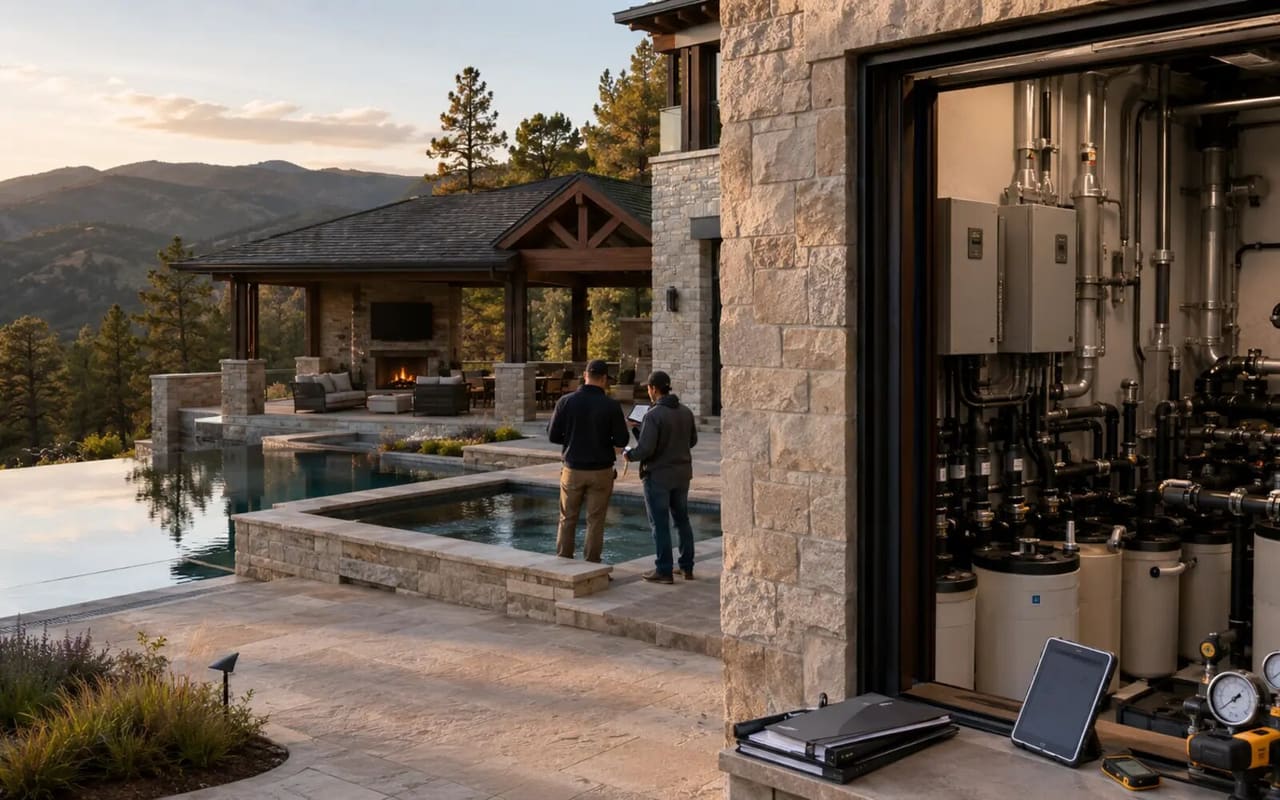
Illustrative Colorado estate equipment room and terrace prepared for systems commissioning and owner turnover
Direct answer

Turnover is complete only when the estate is safe, operational, tested, documented, teachable, and serviceable. The owner should receive functional testing, deficiency closure, training, coordinated as-builts, concealed-work records, equipment and finish schedules, warranties, passwords, service contacts, seasonal procedures, replacement information, and a dated plan for landscape establishment and remaining corrections.

Useful to a client, adviser, or project team?Share the source page so its dates, methods, and limitations stay attached.

Owner briefing

Three points to carry forward.

01

Write the closeout standard early

The contract and specifications should identify required tests, demonstrations, records, training, spare materials, warranties, final inspections, deficiency rules, landscape establishment, and acceptance authority. Waiting until the final invoice produces an incomplete handover.

02

Test systems as systems

Pools, spas, water features, snowmelt, irrigation, drainage, lighting, audio, gates, fire controls, kitchens, heaters, covers, leak detection, security, and automation interact. Verify normal operation, schedules, alarms, manual overrides, shutoff, drainage, freeze protection, access, and recovery—not only whether each device powers on.

03

Deliver the estate record

Provide permit and inspection closeout, coordinated as-builts, survey updates where required, photographs before concealment, equipment schedules, valve and panel directories, finish and sealer records, product data, test reports, warranties, receipts, keys, access credentials, and source files the owner is entitled to receive.

04

Train the actual operators

Owners, estate managers, house staff, service vendors, and security personnel may need different instruction. Record demonstrations when appropriate and provide concise normal, seasonal, emergency, and vacation-mode procedures with named contacts.

05

Separate deficiencies from seasonal work

Track incomplete, damaged, failed, seasonal, owner-deferred, and observation-period items separately. Assign an owner, due date, access requirement, acceptance test, and effect on retainage or warranty for each item.

06

Plan the first operating year

Schedule spring startup, summer tuning, fall shutdown, winter review, landscape replacement windows, warranty inspections, controls review, water and energy benchmarking, and an eleven-month warranty walk before teams disperse and institutional knowledge disappears.

Sources and benchmarks

What each source actually supports.

These references support specific regulations, hazards, planning principles, or clearly labeled published market benchmarks—not feasibility or a fixed price for one property. Open the current source and verify its date, inclusions, parcel, scope, and authority before relying on a planning assumption.

  1. U.S. Department of EnergyCommissioning in Federal BuildingsSupports: General commissioning concepts for verifying system performance and documenting operation; not a residential project specification. (opens in a new tab)
  2. U.S. General Services AdministrationFacilities Standards for the Public Buildings ServiceSupports: General facilities coordination, performance, and commissioning context; not a Colorado residential requirement. (opens in a new tab)
  3. U.S. Environmental Protection AgencyWaterSense Outdoor Water EfficiencySupports: Outdoor water-efficiency principles and WaterSense planning context. (opens in a new tab)

Private assessment

Ready to define the builder your property requires?

Begin registry review