Capital planning · Reviewed July 2026

What Does a Colorado Outdoor Estate Cost to Operate Each Year?

A bottom-up framework for budgeting utilities, landscape care, pool and spa service, seasonal work, preventive maintenance, repairs, and long-term replacement.

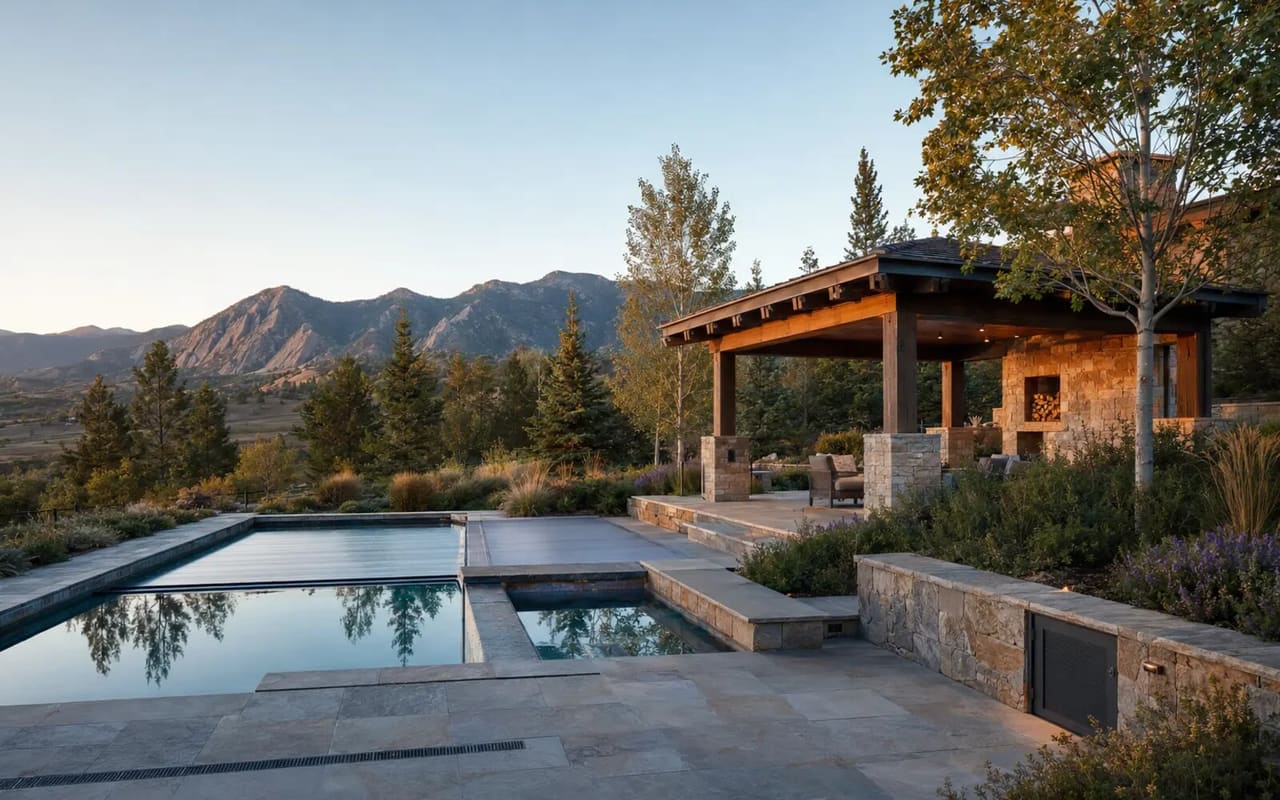
Impeccably maintained Colorado outdoor estate with a heated pool, pavilion, stone terraces, and mature landscape at early morningIllustrative registry study
Direct answer

There is no responsible single percentage for every estate. Build the annual plan from an asset register: water and energy, landscape and irrigation, pool and spa operations, snow and seasonal work, cleaning, inspections, service contracts, repairs, and a separate capital-replacement reserve. The design team should forecast these obligations before the owner approves the final program.

Owner briefing

Three points to carry forward.

01

Create the estate asset register

List every maintainable system and finish: pools, spas, water features, pumps, heaters, covers, irrigation, planting, lawns, trees, lighting, controls, kitchens, fire systems, snowmelt, drainage, gates, furniture, stone, concrete, metal, timber, and specialty equipment. Record model, installer, warranty, service interval, and expected replacement path.

02

Separate four kinds of ownership cost

Routine operations include utilities and recurring service. Preventive maintenance protects performance and warranty. Corrective work responds to failures or damage. Capital replacement funds eventual renewal of equipment, finishes, planting, controls, covers, and other finite-life components. Combining them into one vague allowance hides future exposure.

03

Model water and energy

Pool temperature, covers, pump schedules, water-feature operating hours, irrigation strategy, snowmelt, lighting scenes, heaters, kitchen equipment, and shoulder-season use can materially change consumption. Use equipment schedules, local utility rates, meter data, and owner operating preferences rather than a national average.

04

Price landscape establishment and maturity

The first years may require establishment care, irrigation adjustment, replacement planting, soil work, pruning, tree care, pest response, winter watering, and restoration after severe weather. A mature estate also needs a long-term canopy and specimen-plant strategy—not only weekly maintenance.

05

Plan the Colorado calendar

Spring startup, irrigation activation, pool opening, summer water management, storm inspection, fall shutdown, winterization, snow operations, freeze protection, wildfire-season maintenance, and post-winter review should appear on one annual calendar with named vendors and owner decisions.

06

Fund replacement before failure

Equipment rooms, pumps, heaters, covers, controls, sealers, lighting components, appliances, finishes, and landscape assets do not age on the same schedule. Maintain a rolling five- and ten-year forecast so an estate remains intentional rather than becoming a sequence of emergency repairs.

Primary references

Official sources used for this briefing.

Requirements change. Open the current source and verify the parcel, scope, and authority having jurisdiction before relying on any planning assumption.

  1. Denver WaterTips to Save Water with Swimming Pools and Spas
  2. Colorado State University ExtensionOperating and Maintaining a Home Irrigation System
  3. U.S. Environmental Protection AgencyWaterSense Outdoor Water Efficiency

Private assessment

Ready to define the builder your property requires?

Begin registry review