What Do Engineered Retaining Walls Cost in Colorado?
2026 planning bands for Colorado retaining walls, including engineering, drainage, access, excavation, finishes, exclusions, and hillside risk.
Contractor-informedSources and limits visibleMethodology →
Direct answer
For estate planning in 2026, the Registry uses broad working bands of $40,000–$100,000 for localized landscape walls, $100,000–$300,000 for a prominent engineered retaining system, and $300,000–$1 million+ for a multi-wall hillside network with difficult access, major excavation, drainage, stairs, guards, or architectural finishes. These are contractor-informed scope bands—not bids or unit-price guarantees.
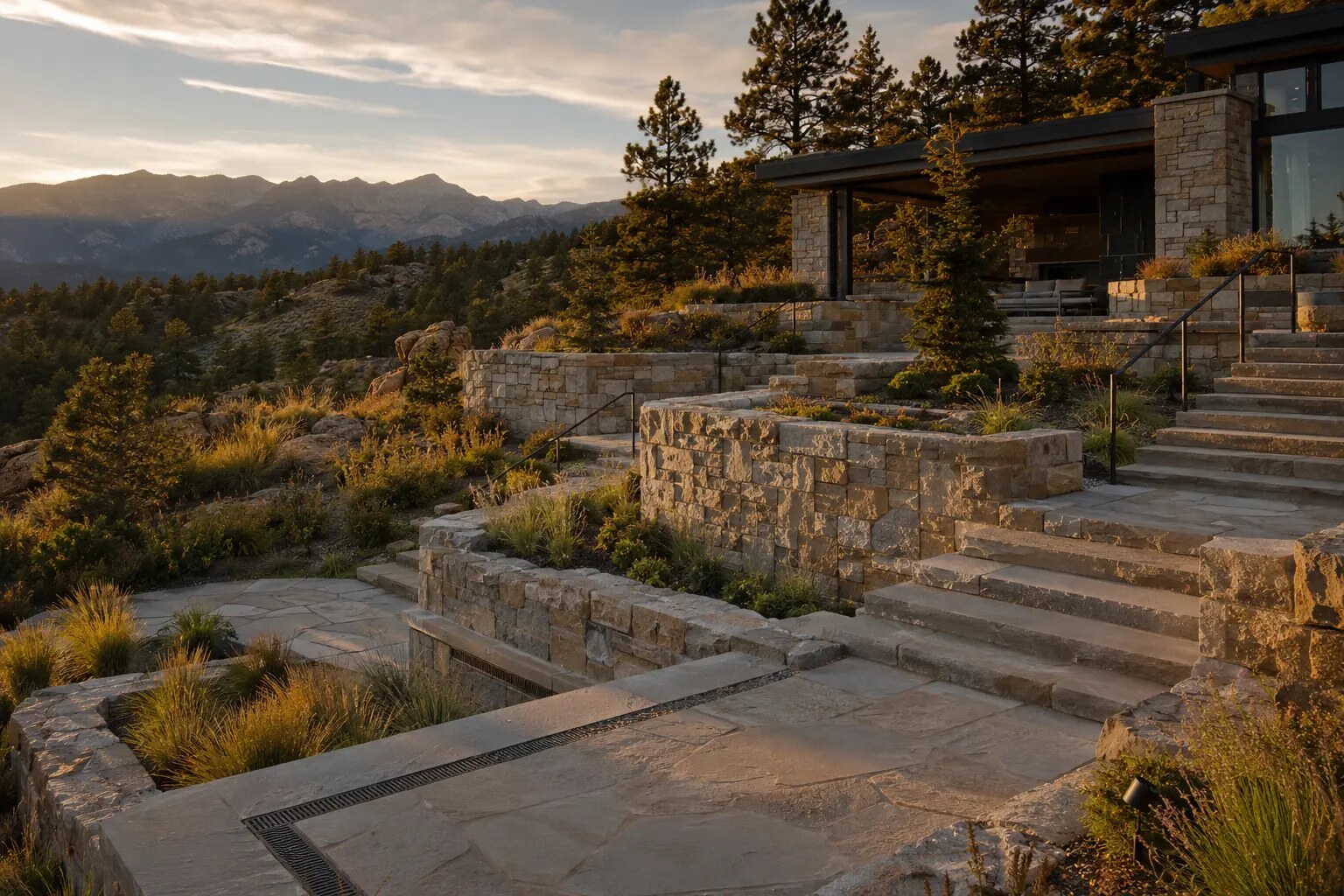
Illustrative planning context—not a completed Registry project or evidence of a quoted cost.
2026 Registry planning framework
Is the wall a landscape element or a site system?
Height and face area matter, but so do surcharge, foundations, excavation, drainage, access, shoring, finish, and the structures the wall supports.
Planning band or model
Scope level
What the level must carry
$40K–$100K
Localized wall package
Limited grade correction or garden structure with manageable access, drainage, excavation, and finish scope.
$100K–$300K
Engineered architectural system
Higher-consequence wall, substantial footing or reinforced system, drainage, premium finish, stairs or guards, and coordinated adjacent work.
$300K–$1M+
Hillside retaining network
Multiple walls or terraces, difficult access, rock, shoring, major earthwork, structural surcharge, complex drainage, cranes or pumping, and full restoration.
These are Registry editorial planning bands or delivery models—not quotes, bids, appraisals, contractor surveys, or guarantees. Scope and property conditions govern.
01
What controls retaining-wall cost?
The important variables are retained height, wall length and geometry, soil and rock, groundwater, surcharge, seismic and structural assumptions, foundation, reinforcement or anchors, excavation, export, access, temporary support, drainage, waterproofing, finish, stairs, guards, utilities, landscape, and restoration.
02
What does the visible face conceal?
A finished wall may conceal excavation, overcut, footing, reinforcement, soil improvement, drain rock, pipe, outlets, waterproofing, drainage composite, anchors, backfill, compaction, sleeves, movement joints, and protection. Those systems often determine performance and cost.
03
Which proposal omissions are most dangerous?
Unassigned geotechnical work, unclear drainage outlets, rock allowances, unsuitable-soil handling, temporary shoring, dewatering, utility conflicts, surcharge assumptions, architectural finish acceptance, and restoration can move risk back to the owner.
04
What should be resolved before fixed pricing?
Provide survey and wall geometry, geotechnical criteria where warranted, structural concept, surcharge and adjacent-structure information, drainage destination, access and excavation plan, finish standard, utility conflicts, permits, and responsibility for landscape and hardscape interfaces.
Direct owner answers
Frequently asked questions.
Can retaining walls be priced by square foot?
A face-area unit can help compare similar walls after scope is defined, but it is unreliable before foundation, height, surcharge, access, excavation, drainage, rock, finish, engineering, and restoration are known.
Do retaining walls need permits in Colorado?
Thresholds and review paths vary by authority, wall height, retained grade, surcharge, location, and adjacent structures. Verify the parcel and complete wall system with the applicable jurisdiction.
Evidence and limitations
What supports this record?
Official sources support regulatory or technical context. The Registry's planning bands are labeled editorial judgments and are not attributed to public agencies.