Start with the broad materials overview when you are choosing a design direction.
How to use the atlas
Use each record for one clear sequence.
Choose an Atlas category such as natural stone, concrete, timber, metals, or drainage interfaces.
Compare examples, then open one specific material for its five-point specification-attention profile.
What the concern level belongs to
Broad to specific, without mixing the scores.
“Natural stone” is a category. Limestone, sandstone, granite, and quartzite are individual examples inside it. System-wide concerns are explained on the category page without a numeric grade; the five-point scale appears only after you choose one named material.
Installed-system record
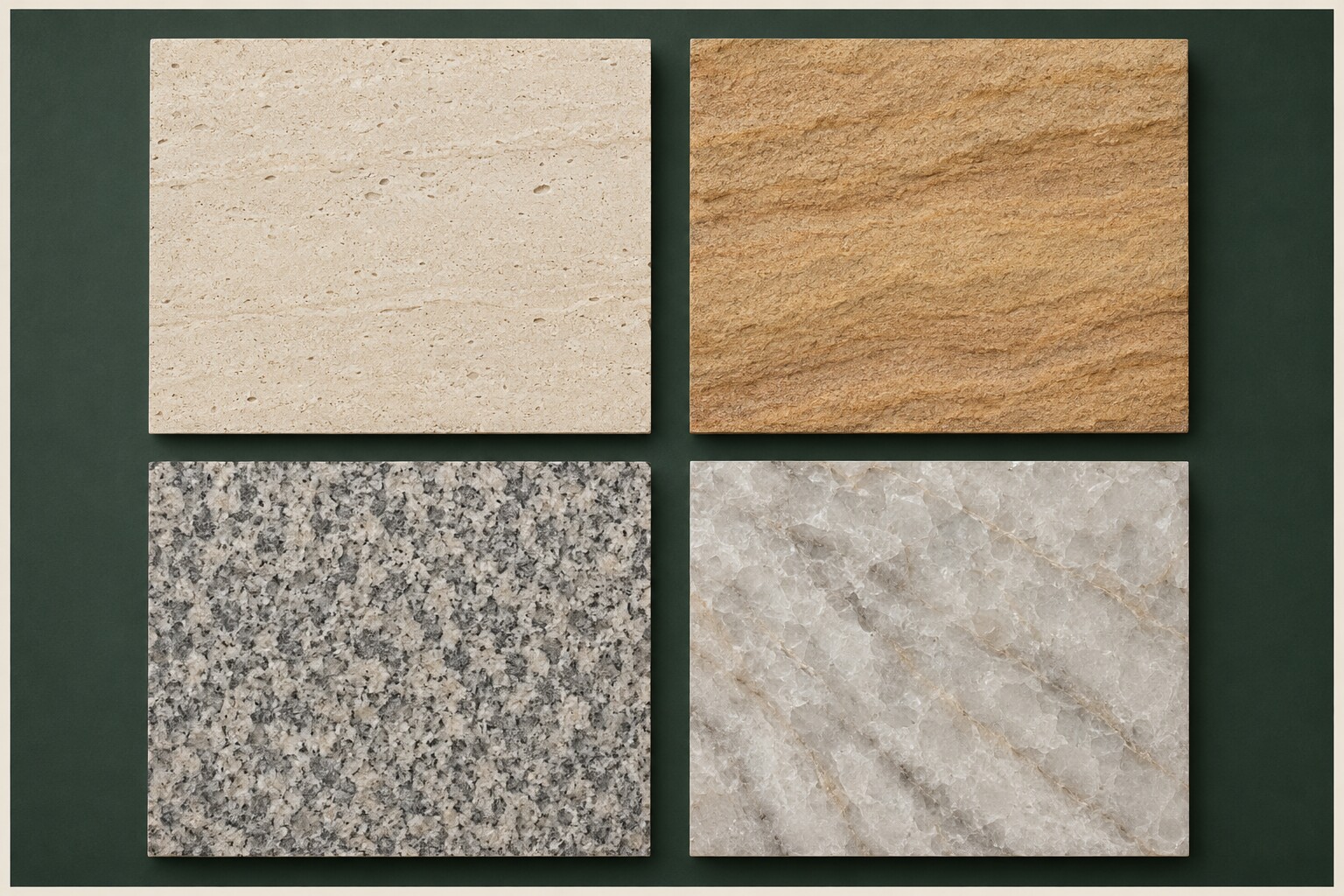
Natural stone exterior systems
Evaluate stone as an assembly: geology, absorption, freeze–thaw exposure, anchorage or bond, joints, drainage, and compatible adjacent materials.
Compare examples in this category →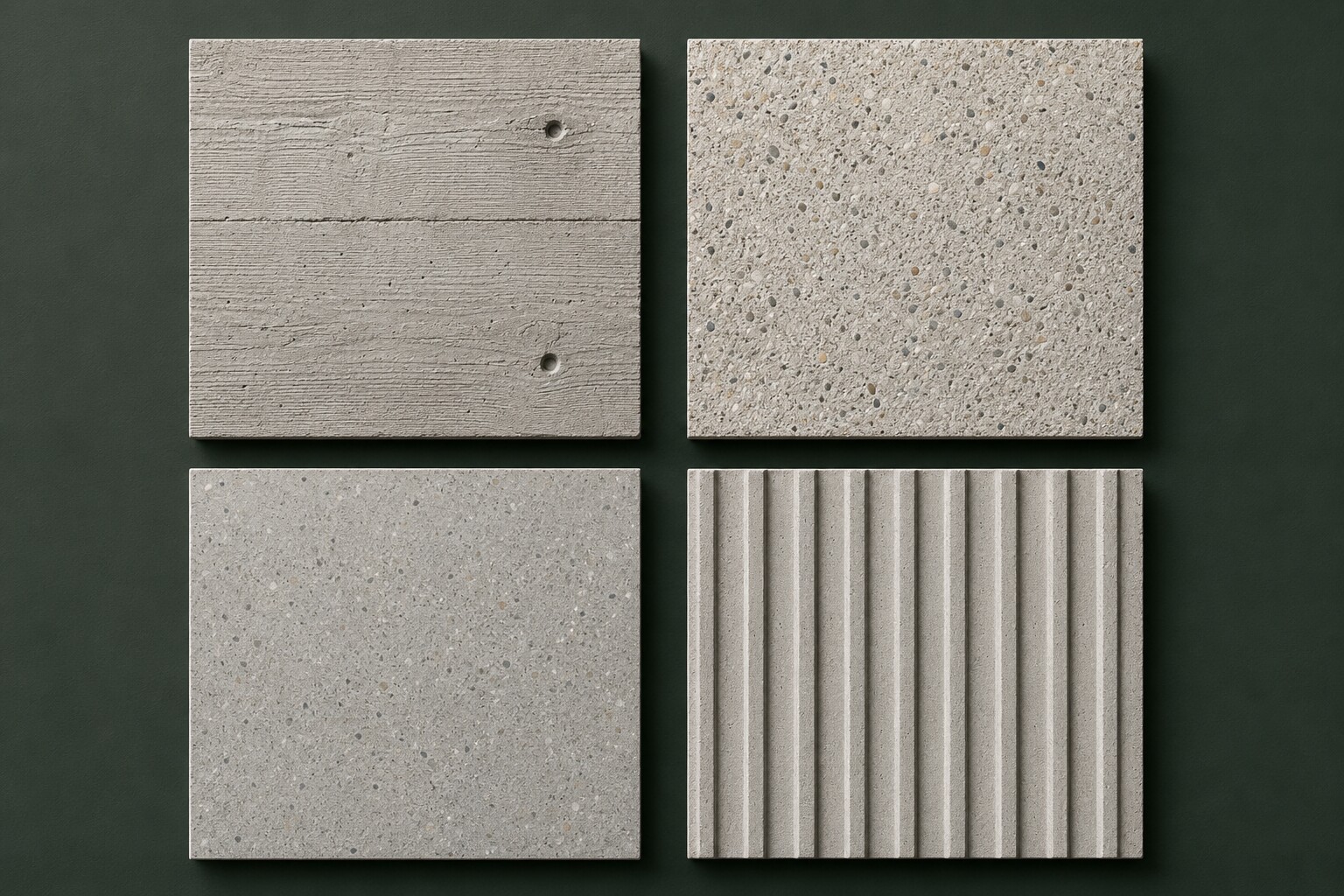
Installed-system record
Architectural concrete
Durability begins with exposure classification, mixture design, consolidation, curing, drainage, joints, and protection—not the final color or texture.
Compare examples in this category →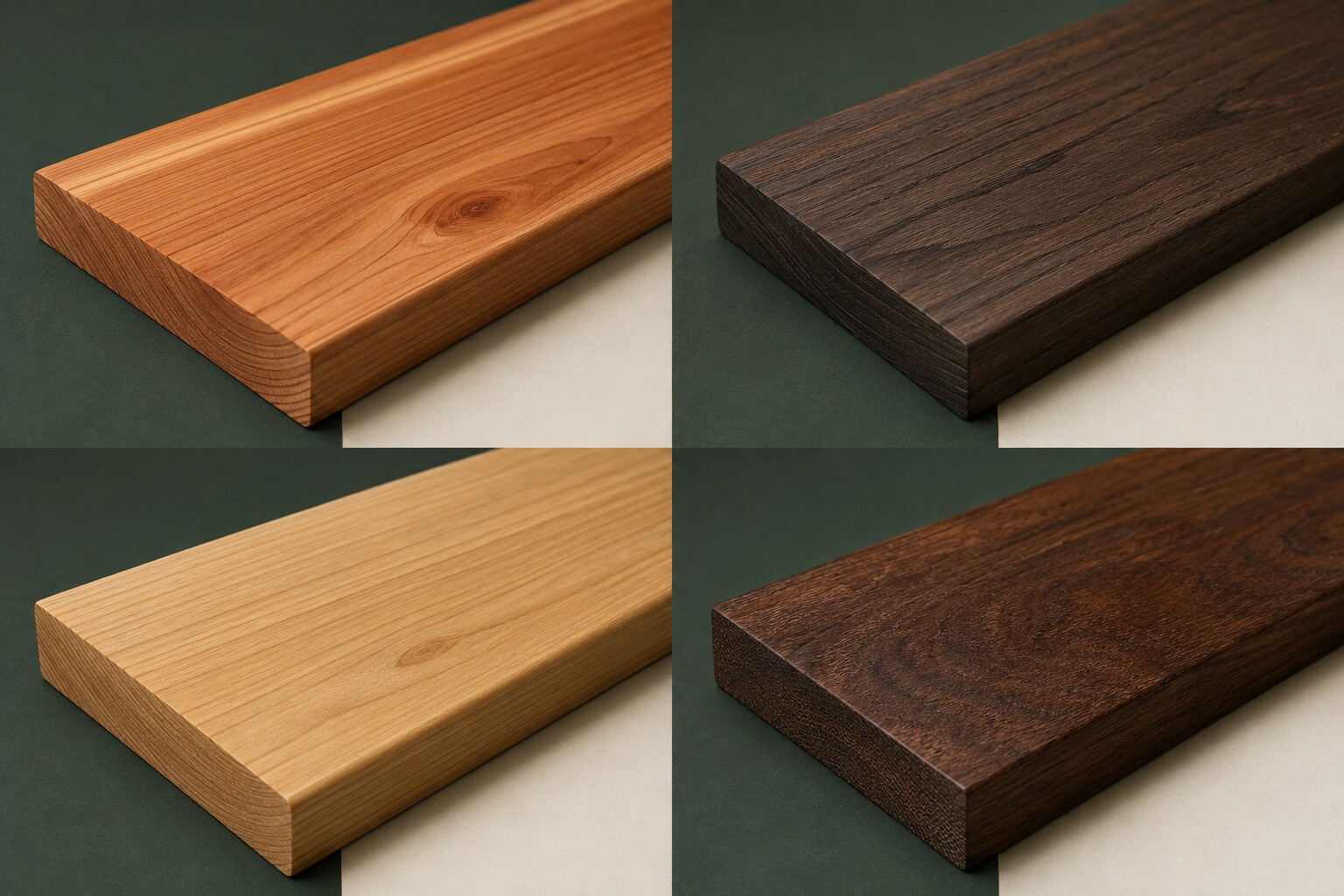
Installed-system record
Exterior timber & wood finishes
Species, grade, moisture cycling, detailing, coatings, fasteners, end grain, ventilation, and maintenance expectations must be considered together.
Compare examples in this category →
Installed-system record
Metals, finishes & corrosion
Material pairing, coating system, water retention, salts, fasteners, fabrication damage, and maintainability shape outdoor metal performance.
Compare examples in this category →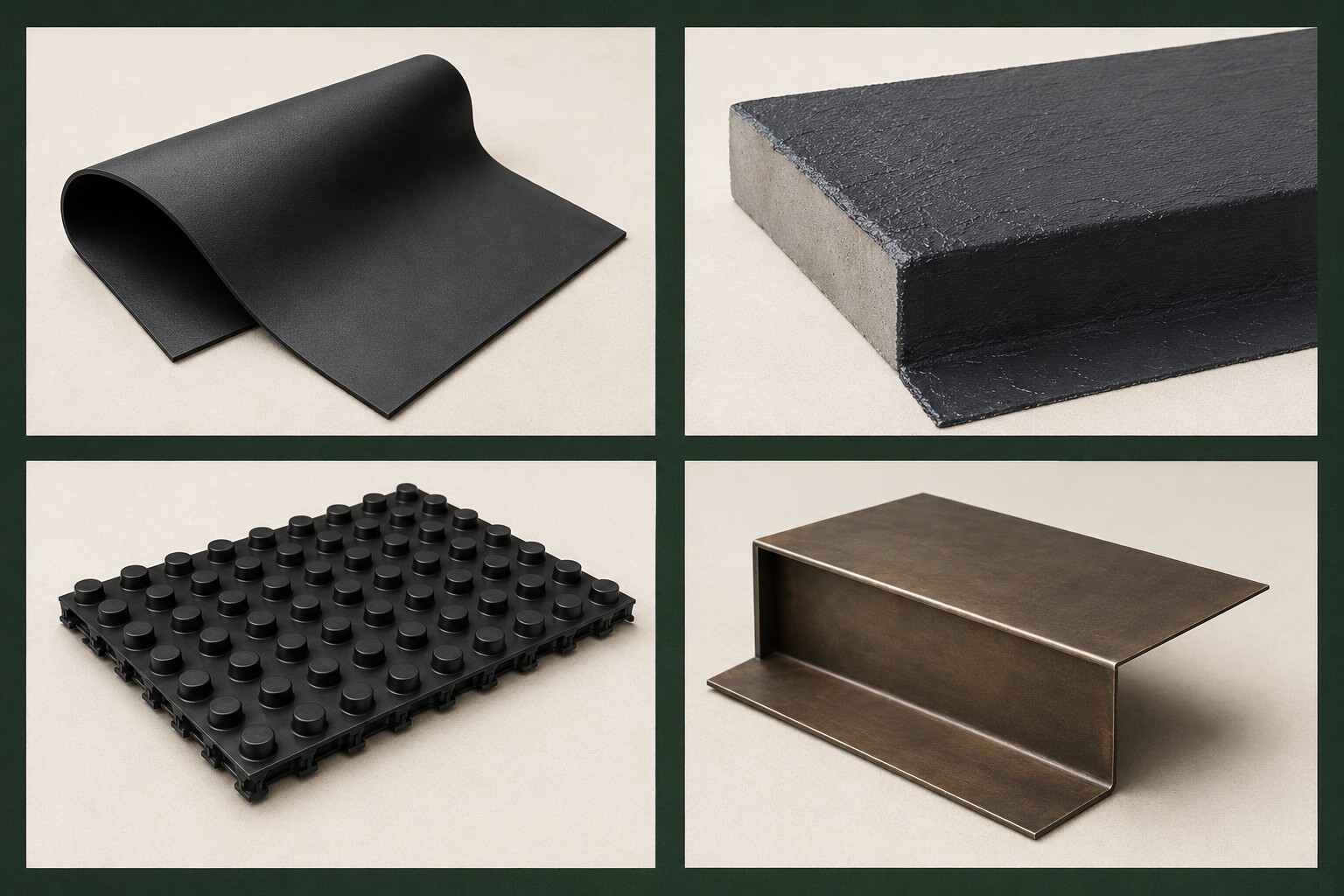
Installed-system record
Waterproofing & drainage interfaces
The most consequential exterior failures often occur where systems meet: walls and paving, planters and structures, pools and decks, roofs and masonry, or membranes and penetrations.
Compare examples in this category →Decision comparisons
Compare alternatives before opening a specification profile.
These records answer the owner's real selection question first, then connect every alternative to its exact Atlas profile, assembly concerns, evidence limits, and project-team questions.
01 · Material decision
Thermally Modified Wood vs. Accoya vs. Cedar in Colorado
Compare thermally modified wood, acetylated wood such as Accoya, and cedar for Colorado decking, siding, soffits, screens, and outdoor structures.
Open comparison →02 · Material decisionLimestone vs. Sandstone vs. Granite vs. Quartzite in Colorado
Compare limestone, sandstone, granite, and quartzite for Colorado terraces, walls, steps, pool surrounds, and exterior architectural details.
Open comparison →03 · Material decisionBest Pool-Deck Materials for Colorado Estates
Compare stone, exterior porcelain, and architectural concrete for Colorado pool decks: traction, freeze-thaw, drainage, heat, joints, and repair.
Open comparison →04 · Material decisionWeathering Steel vs. Powder-Coated Aluminum Outdoors
Compare weathering steel and powder-coated aluminum for Colorado screens, planters, walls, gates, pergolas, panels, and landscape structures.
Open comparison →05 · Material decisionSheet vs. Liquid-Applied Waterproofing Outdoors
Compare sheet and liquid-applied waterproofing for Colorado terraces, planters, walls, decks, water features, and below-grade outdoor structures.
Open comparison →Plain-English terms used throughout the Atlas
- Assembly
- The complete built system—not only the visible finish. It can include structure, backing, membranes, fasteners, joints, drainage, and adjacent materials.
- Substrate
- The supporting surface underneath a finish, coating, membrane, or adhered product.
- Interface
- The place where two materials, trades, or systems meet and where drainage, movement, or responsibility often needs explicit resolution.
- Mockup
- A representative sample installation used to approve appearance, workmanship, joints, transitions, or performance before production work proceeds.