Feature intelligence · Reviewed August 2026

Which Luxury Outdoor Materials Perform Best in Colorado?

A performance-first guide to stone, concrete, porcelain, metal, timber, joints, mockups, moisture, freeze-thaw exposure, UV, snow, and long-term replacement.

Illustrative Colorado estate material study with limestone, porcelain, board-formed concrete, bronze, steel, and native planting
Direct answer

There is no universally best luxury material for Colorado. The correct assembly matches the property’s exposure, substrate, drainage, movement, deicing, heat, maintenance tolerance, and architectural language. Material name alone is less important than grade, testing, detailing, installation, and stewardship.

Useful to a client, adviser, or project team?Share the source page so its dates, methods, and limitations stay attached.

Where this page fits

Start broad. Drill down only when you need evidence.

This guide is the materials overview: use it to understand palette, character, mockups, and design tradeoffs. The Performance Atlas is the next layer for category comparisons, installed-system concerns, and specific five-point material profiles.

  1. 01Materials overview

    Choose a design direction and understand the major families.

  2. 02Performance Atlas

    Choose stone, concrete, timber, metals, or waterproofing and drainage.

  3. 03Category examples

    Compare the specific options within that system.

  4. 04Specific material profile

    Read its five-point specification-attention factors and verification list.

Continue to the Performance Atlas →

Owner briefing

Three points to carry forward.

01

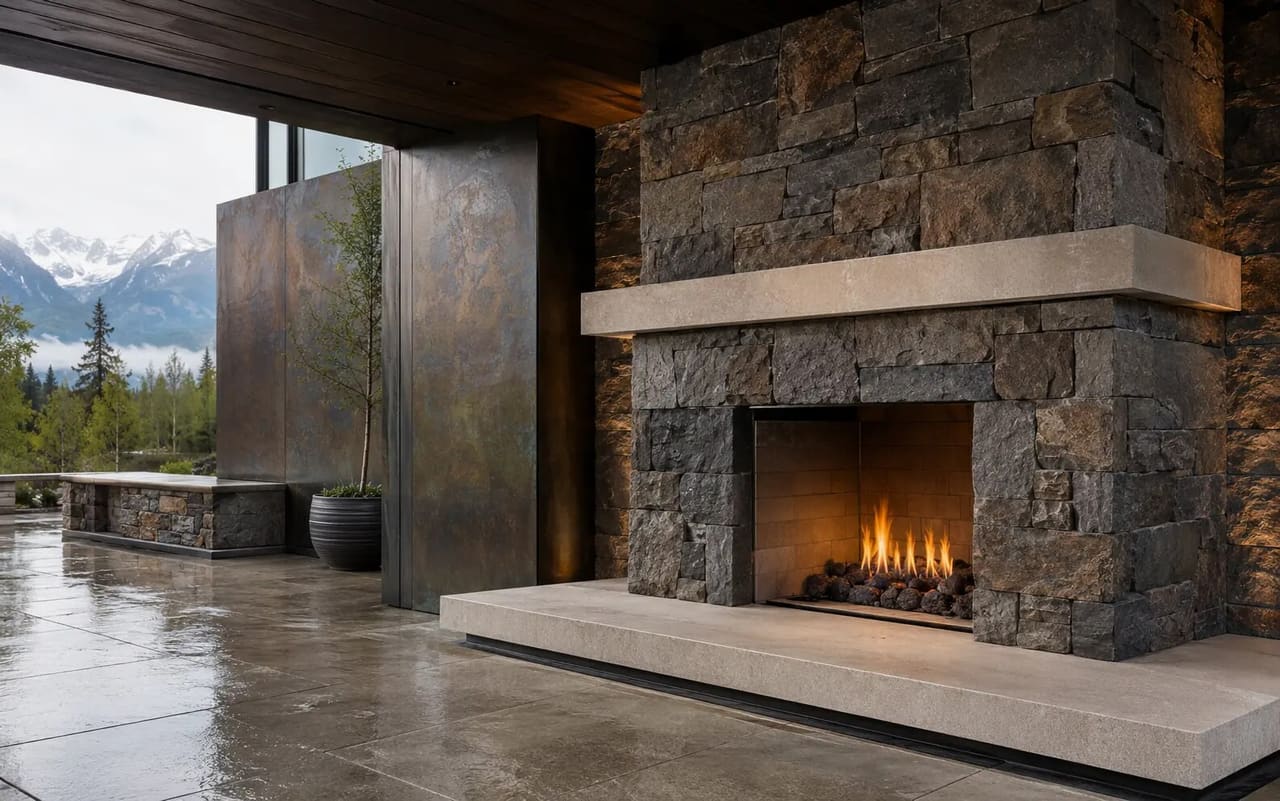
Natural stone

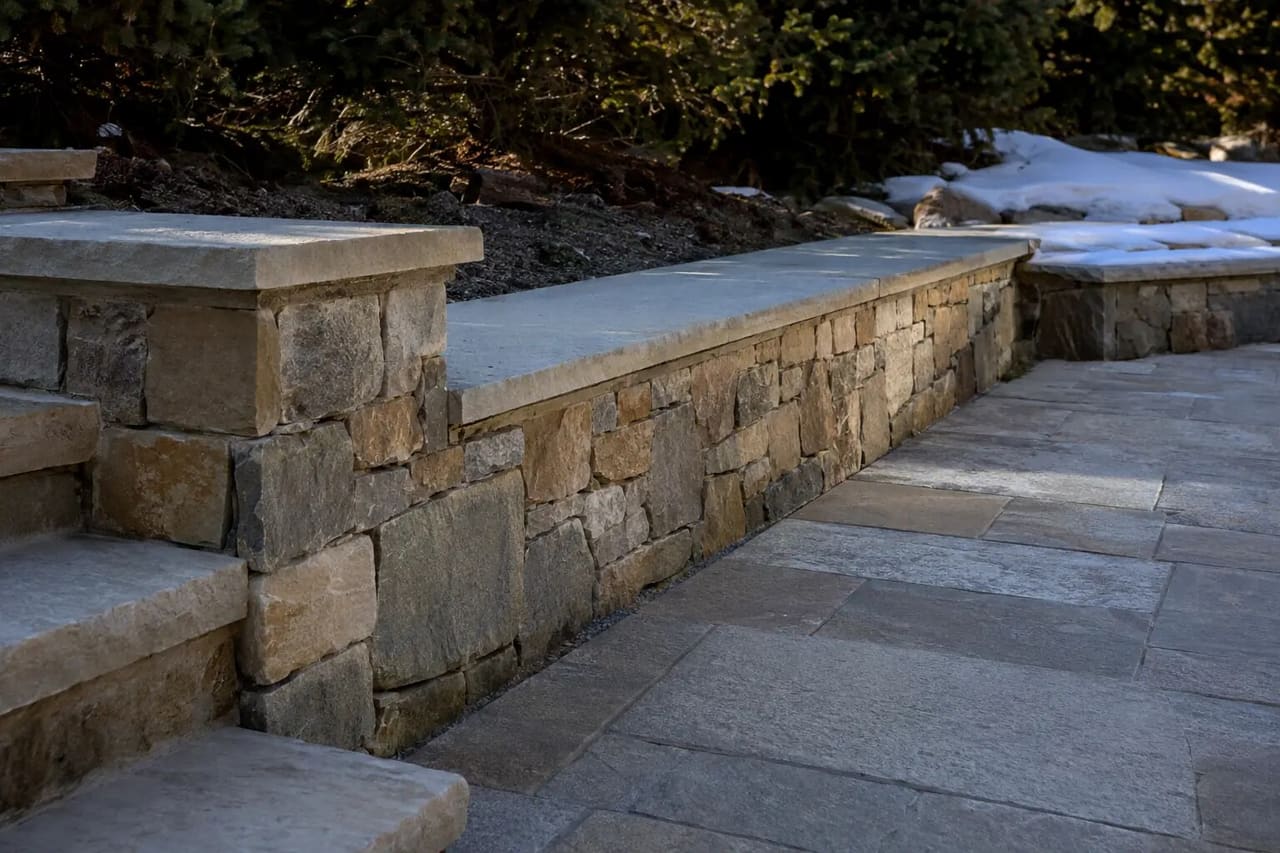
Stone selection should address geology, absorption, density, salt and mineral behavior, finish, thickness, anchorage or setting method, movement, coping and edge conditions, quarry variation, replacement stock, cleaning, and its relationship to the residence.

Common design examples
  • Limestone
  • Sandstone
  • Granite
  • Quartzite
Illustrative natural-stone terrace showing varied stone, cap slope, joints, drainage edge, and adjacent paving
Illustrative material study—not a project photograph or construction detail. Read the visible stone together with joints, transitions, slope, and drainage.Open the related source record →
02

Architectural concrete and precast

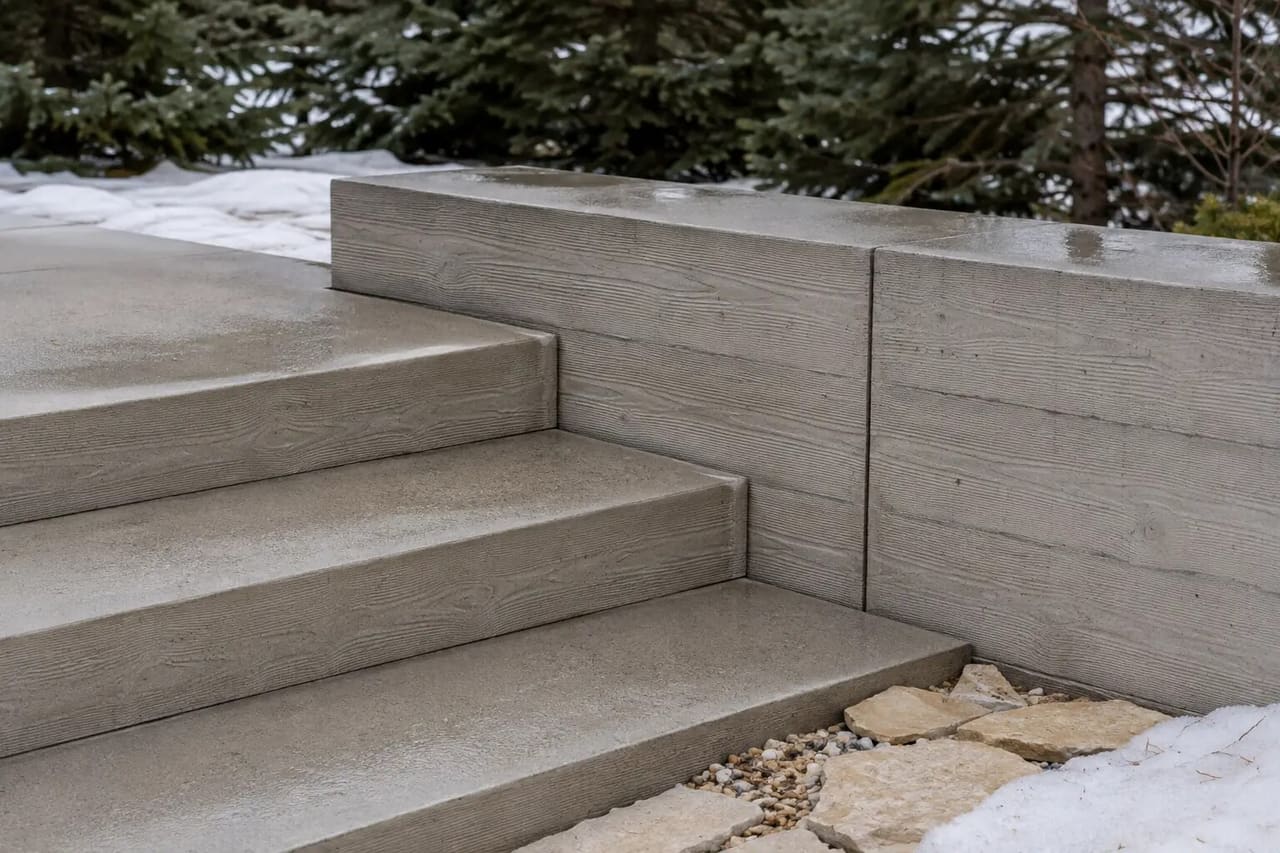
Board-form, sandblast, honed, cast-in-place, and precast work can create monolithic architecture, but color, mix, joints, reinforcement, cracking expectations, formwork, mockups, curing, sealers, drainage, and repair standards must be defined.

Common design examples
  • Board-formed cast-in-place
  • Sandblasted precast
  • Honed precast
  • GFRC accents
Illustrative board-formed concrete steps and wall showing a control joint, sloped surfaces, and a drainage band
Illustrative material study—not a project photograph or construction detail. Appearance is only one part of mixture, placement, curing, joints, and drainage.Open the related source record →
03

Large-format porcelain

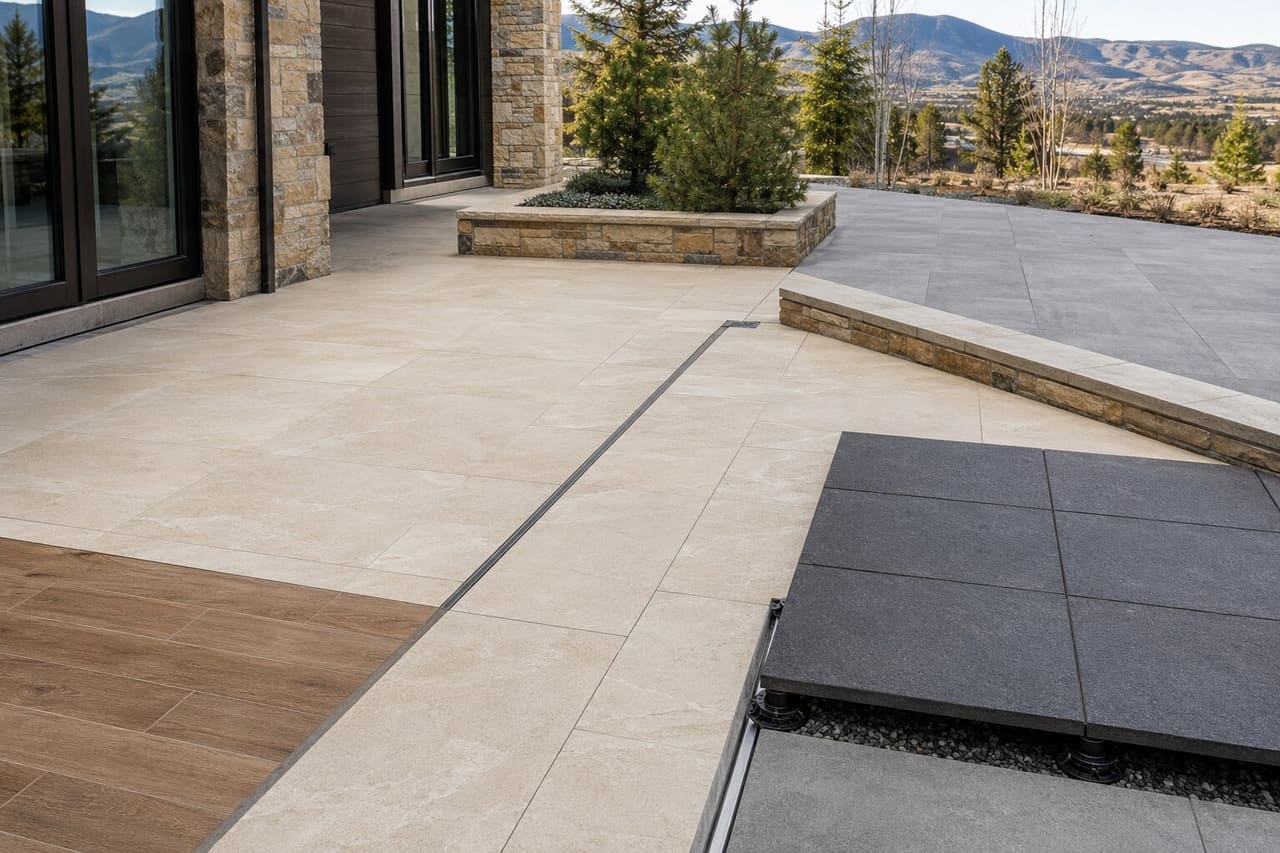
Exterior porcelain can provide controlled color and low absorption, yet substrate, support, movement joints, edges, slip resistance, drainage, freeze-thaw suitability, setting materials, replacement pieces, and installation tolerances determine whether the system feels permanent.

Common design examples
  • Stone-look slabs
  • Concrete-look pavers
  • Textured pedestal pavers
  • Wood-look planks
Illustrative exterior porcelain terrace comparing limestone-look slabs, concrete-look pavers, charcoal textured pavers, and wood-look planks
Illustrative material study—not a product endorsement, project photograph, or installation detail. Confirm the actual exterior rating, finish, support, joints, setting system, and drainage.Open the related source record →
04

Bronze, steel, and specialty metal

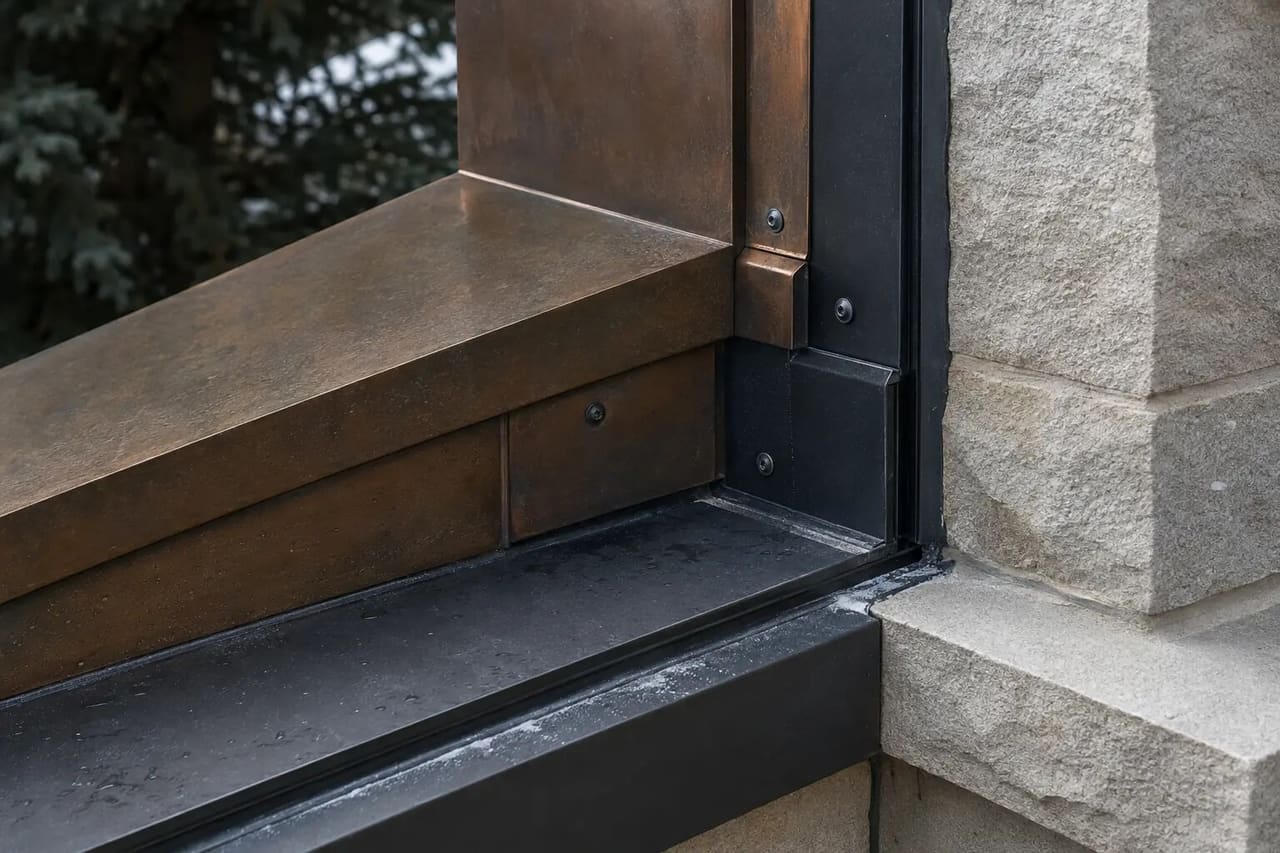
Metal can provide exceptionally precise screens, edges, stairs, railings, doors, fire elements, and water details. Alloy, finish, patina, welding, fasteners, galvanic relationships, drainage, heat, runoff staining, touch temperature, and maintenance should be coordinated.

Common design examples
  • Architectural bronze
  • Weathering steel
  • Powder-coated aluminum
  • Stainless steel
Illustrative exterior metal detail showing bronze, coated steel, fastened joints, drained edges, and protected transitions
Illustrative material study—not a project photograph or fabrication detail. Pairing, edges, fasteners, water retention, and repair access drive the review.Open the related source record →
05

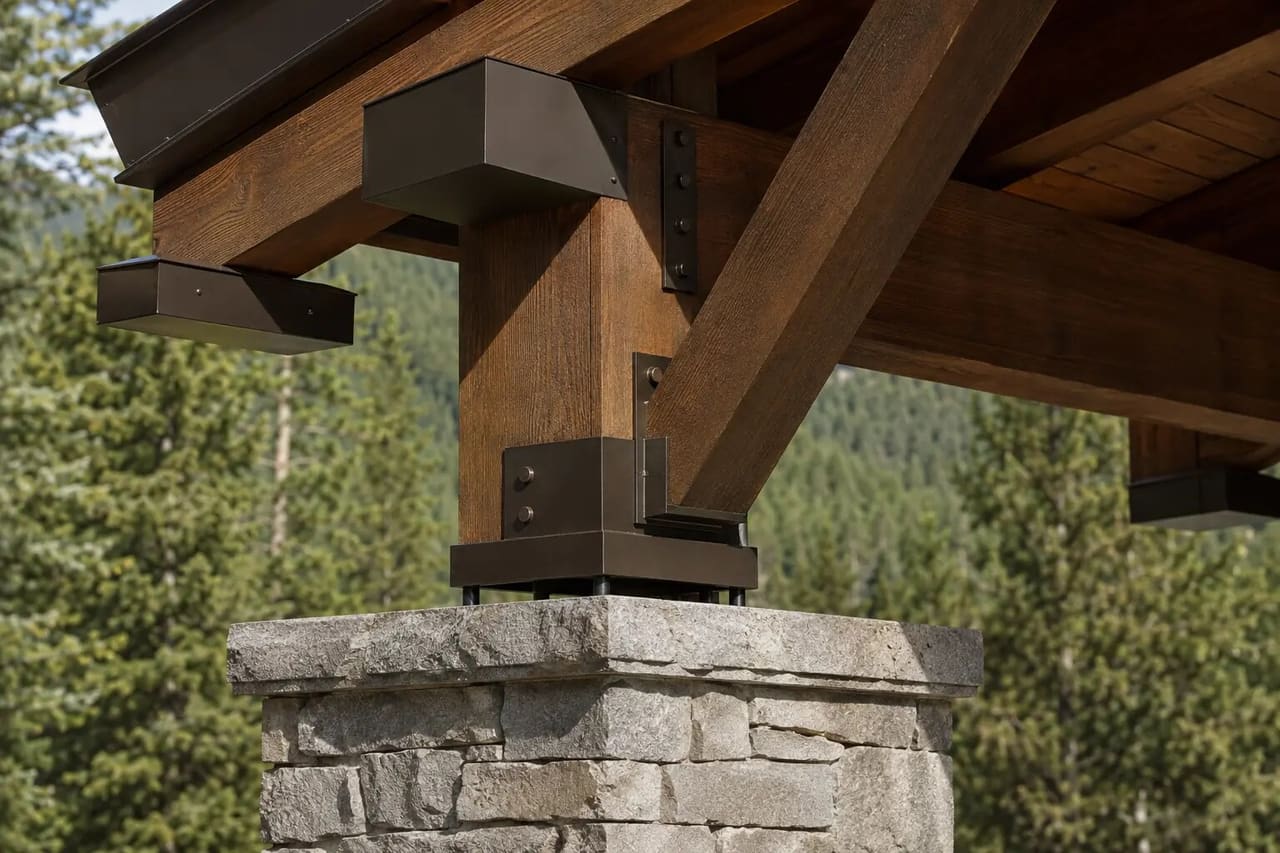
Timber and modified wood

Timber brings warmth to pavilions, ceilings, screens, decks, and gates. Species, modification, moisture movement, checking, finish cycle, UV exposure, snow, combustibility, concealed connections, ventilation, and replacement access must align with the property’s risk and upkeep model.

Common design examples
  • Western red cedar
  • Thermally modified wood
  • Acetylated wood
  • Durable hardwood
Illustrative exterior timber connection showing protected end grain, a draining base gap, coated fasteners, and pigmented finish
Illustrative material study—not a project photograph or construction detail. Durable woodwork depends on drying paths and maintainable details, not finish alone.Open the related source record →
06

The mockup standard

Build representative exterior mockups early enough to change the work. Include adjacent materials, joints, corners, terminations, lighting, water, heat, sealers, and cleaning. Review in sun, shade, wet conditions, and evening light before approving production.

Sources and benchmarks

What each source actually supports.

These references support specific regulations, hazards, planning principles, or clearly labeled published market benchmarks—not feasibility or a fixed price for one property. Open the current source and verify its date, inclusions, parcel, scope, and authority before relying on a planning assumption.

  1. Colorado Geological SurveyExpansive Soil and RockSupports: The presence and consequences of expansive soil and rock hazards in Colorado; not site-specific geotechnical values. (opens in a new tab)
  2. City of Cherry Hills VillageResidential Fence and Wall RequirementsSupports: Current local fence and wall parameters in Cherry Hills Village; verify the parcel and proposed scope. (opens in a new tab)
  3. Boulder CountyWildfire Mitigation Code RequirementsSupports: Boulder County wildfire-mitigation code context; verify current applicability to the parcel and scope. (opens in a new tab)

Private assessment

Ready to define the builder your property requires?

Begin registry review