Western red cedar
Naturally durable and visually warm. Grade, grain, fasteners, end-grain protection, UV exposure, and maintenance expectations should be explicit.
Open Western red cedar profile →Installed-system planning record
Species, grade, moisture cycling, detailing, coatings, fasteners, end grain, ventilation, and maintenance expectations must be considered together.
The complete installed system for this category—not the individual examples and not appearance alone. The review includes the visible material, support or substrate, joints, attachment, drainage, transitions, installation, and upkeep.
Step 1 · Compare examples
These are generic illustrative specimens for visual orientation. Color, grain, aggregate, finish, weathering, and performance vary by source and product; approve the actual sample and technical data.
Want the five-point profiles? Open one specific material below. Those scores show specification attention for that named material only; they are not a quality or durability grade.
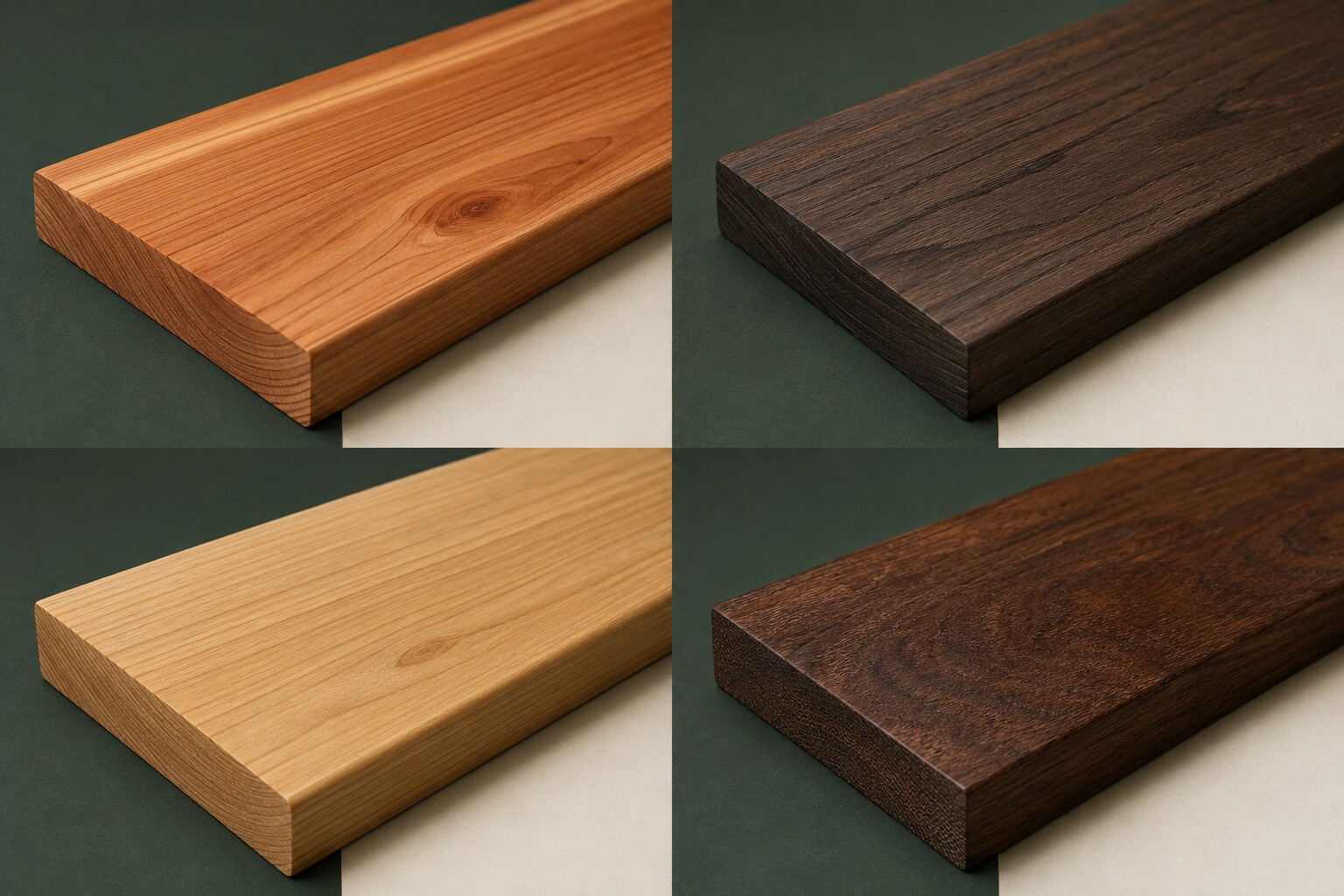
Naturally durable and visually warm. Grade, grain, fasteners, end-grain protection, UV exposure, and maintenance expectations should be explicit.
Open Western red cedar profile →Modification can improve dimensional stability, while brittleness, fastening, color change, sourcing, and manufacturer instructions still matter.
Open Thermally modified wood profile →Modification can improve stability and decay resistance. Confirm approved coatings, fasteners, fabrication details, warranties, and realistic weathering.
Open Acetylated wood profile →Density and natural durability vary by species. Verify responsible sourcing, movement, fastening, checking, finish strategy, and replacement availability.
Open Durable hardwood profile →Decision comparisons
Use these owner-side comparisons to test specification tradeoffs, exposure, maintenance, and replacement strategy before a product or assembly is committed.
Step 2 · Whole-system concerns
These concern levels apply to the complete installed system across the examples above. They are planning priorities—not scores for an individual material, product, supplier, or workmanship. Use the specific material profiles above for the separate five-point layer.
Direct sunlight changes color and finish performance; pigment, preparation, exposure, and maintenance timing matter.
Drainage, ventilation, end-grain protection, splash exposure, and drying paths govern long-term performance.
Species or modification helps, but persistent wetting and trapped moisture can overwhelm a finish-only strategy.
Review intensity rises in the wildland–urban interface; the actual assembly, location, clearances, and code govern.
Step 3 · Inspect the assembly
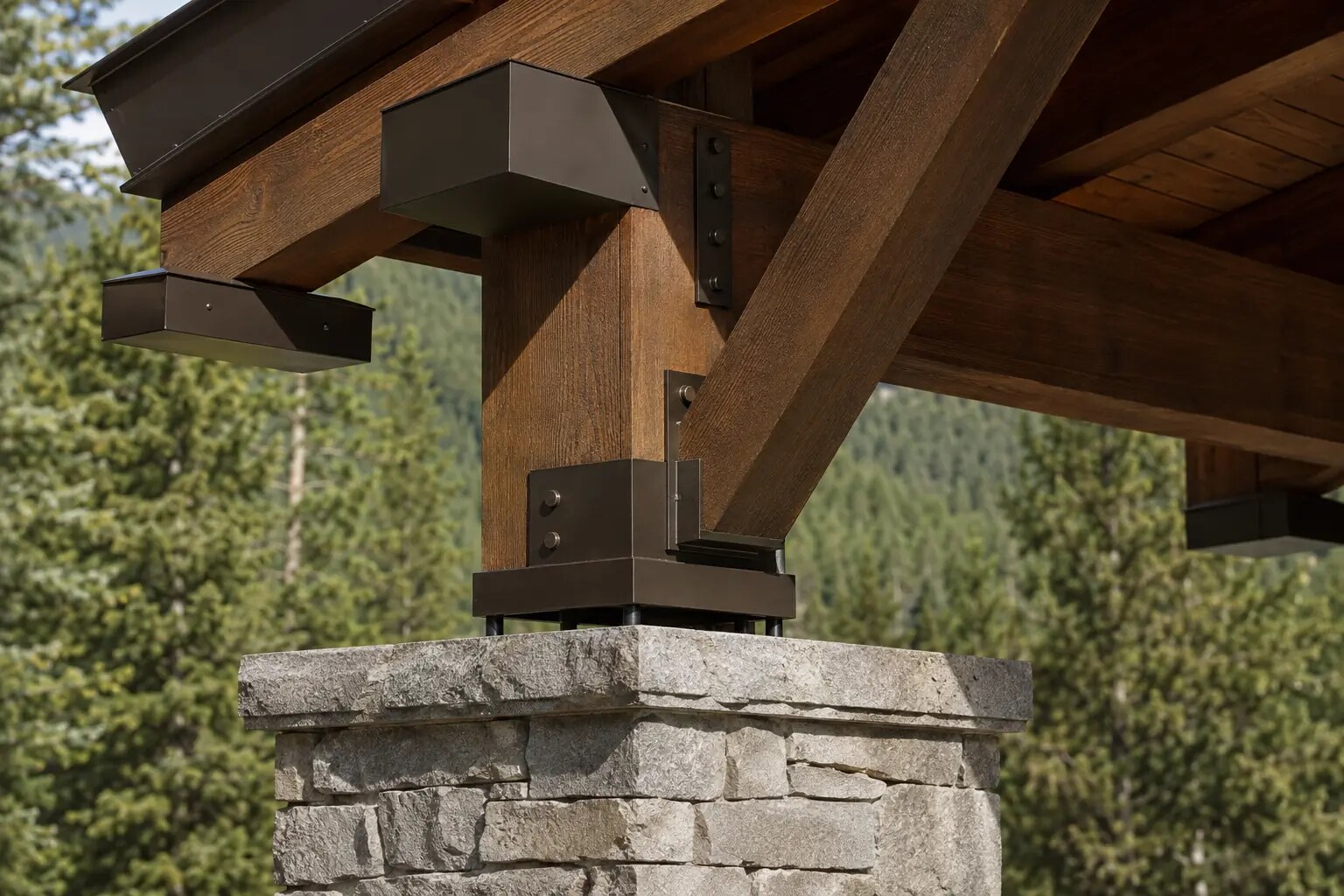
Grain, pigment, end-grain treatment, checking, fasteners, and splash exposure.
Drainage, ventilation, connectors, flashing, separation, and replaceable components.
Species and grade, moisture condition, coating system, installation instructions, and maintenance interval.
Step 4 · Owner decision checklist
Use these finding-and-question pairings during design, submittal review, mockups, installation, and closeout.
Keeping wood dry through design and drainage is more durable than relying on a finish as the sole defense.
Ask the teamHow are end grain, horizontal surfaces, and splash zones protected?
End grain, horizontal surfaces, connections, and trapped-water conditions deserve special detailing.
Ask the teamCan assemblies drain and dry after wetting?
Finish performance varies with substrate preparation, exposure, pigment, film formation, and maintenance timing.
Ask the teamWhat maintenance interval is realistic for the exposure and desired appearance?
Step 5 · Evidence and limits
Source credit identifies the research record. Contractor-informed Registry interpretation connects those principles to owner questions; it does not imply agency authorship, endorsement, product approval, or a parcel-specific conclusion.
The project team must still confirm the actual product, source, testing, exposure, substrate, fasteners or anchors, adjacent materials, installation instructions, mockups, warranties, maintenance, and local requirements.
Read the Registry methodology →