Architectural bronze
Chosen for depth and evolving patina. Confirm alloy, runoff staining, adjacent materials, fasteners, finish expectations, and cleaning.
Open Architectural bronze profile →Installed-system planning record
Material pairing, coating system, water retention, salts, fasteners, fabrication damage, and maintainability shape outdoor metal performance.
The complete installed system for this category—not the individual examples and not appearance alone. The review includes the visible material, support or substrate, joints, attachment, drainage, transitions, installation, and upkeep.
Step 1 · Compare examples
These are generic illustrative specimens for visual orientation. Color, grain, aggregate, finish, weathering, and performance vary by source and product; approve the actual sample and technical data.
Want the five-point profiles? Open one specific material below. Those scores show specification attention for that named material only; they are not a quality or durability grade.
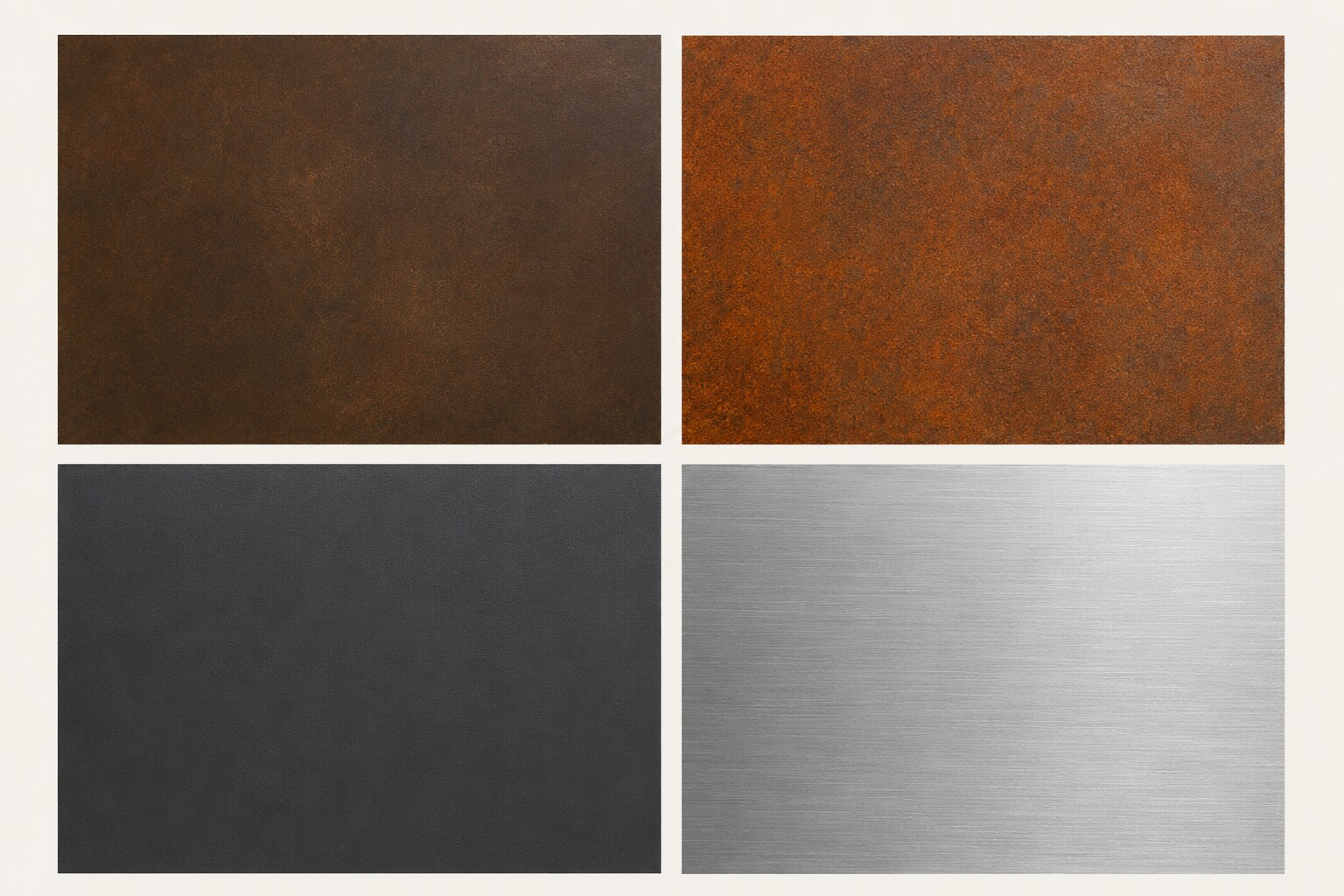
Chosen for depth and evolving patina. Confirm alloy, runoff staining, adjacent materials, fasteners, finish expectations, and cleaning.
Open Architectural bronze profile →Designed oxidation is not maintenance-free. Drainage, salt exposure, runoff staining, welds, edges, and periods of persistent wetness matter.
Open Weathering steel profile →Lightweight and corrosion resistant in many uses. Specify pretreatment, coating class, color retention, cut-edge repair, and compatible hardware.
Open Powder-coated aluminum profile →Grade and finish must match the exposure. Chlorides, crevices, weld treatment, tea staining, dissimilar metals, and cleaning access require review.
Open Stainless steel profile →Decision comparisons
Use these owner-side comparisons to test specification tradeoffs, exposure, maintenance, and replacement strategy before a product or assembly is committed.
Step 2 · Whole-system concerns
These concern levels apply to the complete installed system across the examples above. They are planning priorities—not scores for an individual material, product, supplier, or workmanship. Use the specific material profiles above for the separate five-point layer.
Retained water, wet–dry cycling, and concealed collection points can drive staining, coating failure, and corrosion.
Chloride residue raises corrosion risk at bases, fasteners, cut edges, welds, and areas that are difficult to rinse.
Dissimilar metals in electrical contact with an electrolyte require deliberate pairing, isolation, and drainage.
UV is usually a finish and color-retention question rather than the dominant base-metal durability mechanism.
Step 3 · Inspect the assembly
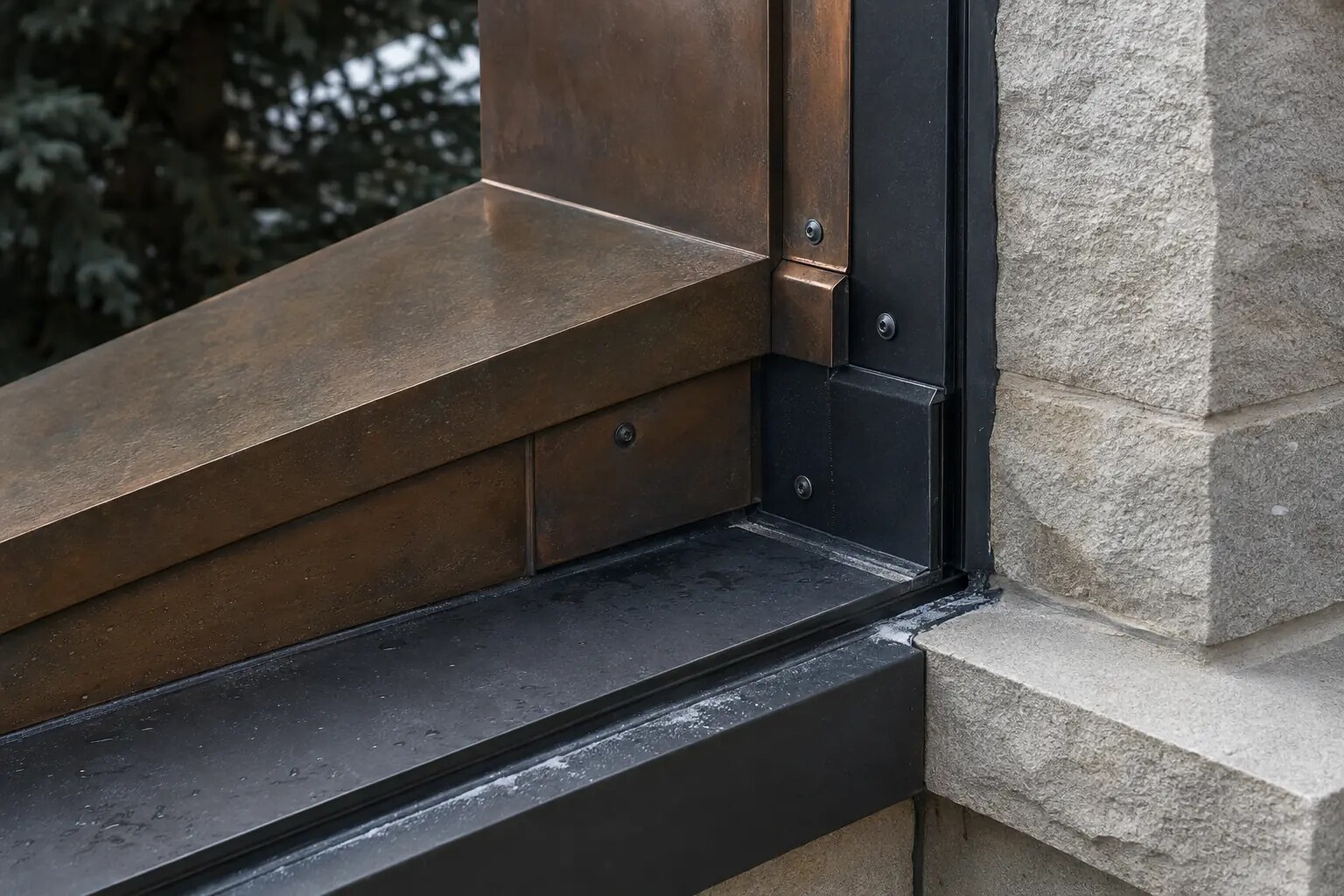
Coating consistency, welds, cut edges, fasteners, staining, and water collection points.
Isolation between metals, drainage, ventilation, concealed connectors, and coating continuity.
Material pairing, coating specification, field-repair method, salt exposure, and maintenance access.
Step 4 · Owner decision checklist
Use these finding-and-question pairings during design, submittal review, mockups, installation, and closeout.
Dissimilar metals can create galvanic corrosion when electrical contact and an electrolyte are present.
Ask the teamWhich dissimilar metals touch, and how are they isolated?
Edges, welds, cut surfaces, fasteners, and field damage often need more attention than broad factory-finished faces.
Ask the teamHow are cut edges, welds, fasteners, and field damage treated?
Drainage, ventilation, coating repair access, and salt exposure should influence detailing and material pairing.
Ask the teamCan water and deicing residue collect in concealed or horizontal locations?
Step 5 · Evidence and limits
Source credit identifies the research record. Contractor-informed Registry interpretation connects those principles to owner questions; it does not imply agency authorship, endorsement, product approval, or a parcel-specific conclusion.
The project team must still confirm the actual product, source, testing, exposure, substrate, fasteners or anchors, adjacent materials, installation instructions, mockups, warranties, maintenance, and local requirements.
Read the Registry methodology →