Specific material planning profile

Architectural bronze

A copper-alloy family selected for depth and evolving patina, requiring clear expectations for alloy, runoff, adjacent materials, fasteners, and maintenance.

Material category
Metals, finishes & corrosion
Common exterior uses
Gates, railings, screens, panels, hardware, water features, trim, planters, and custom fabrication.
What is scored
Specification attention for this named material type—not quality, beauty, durability, or a particular product.
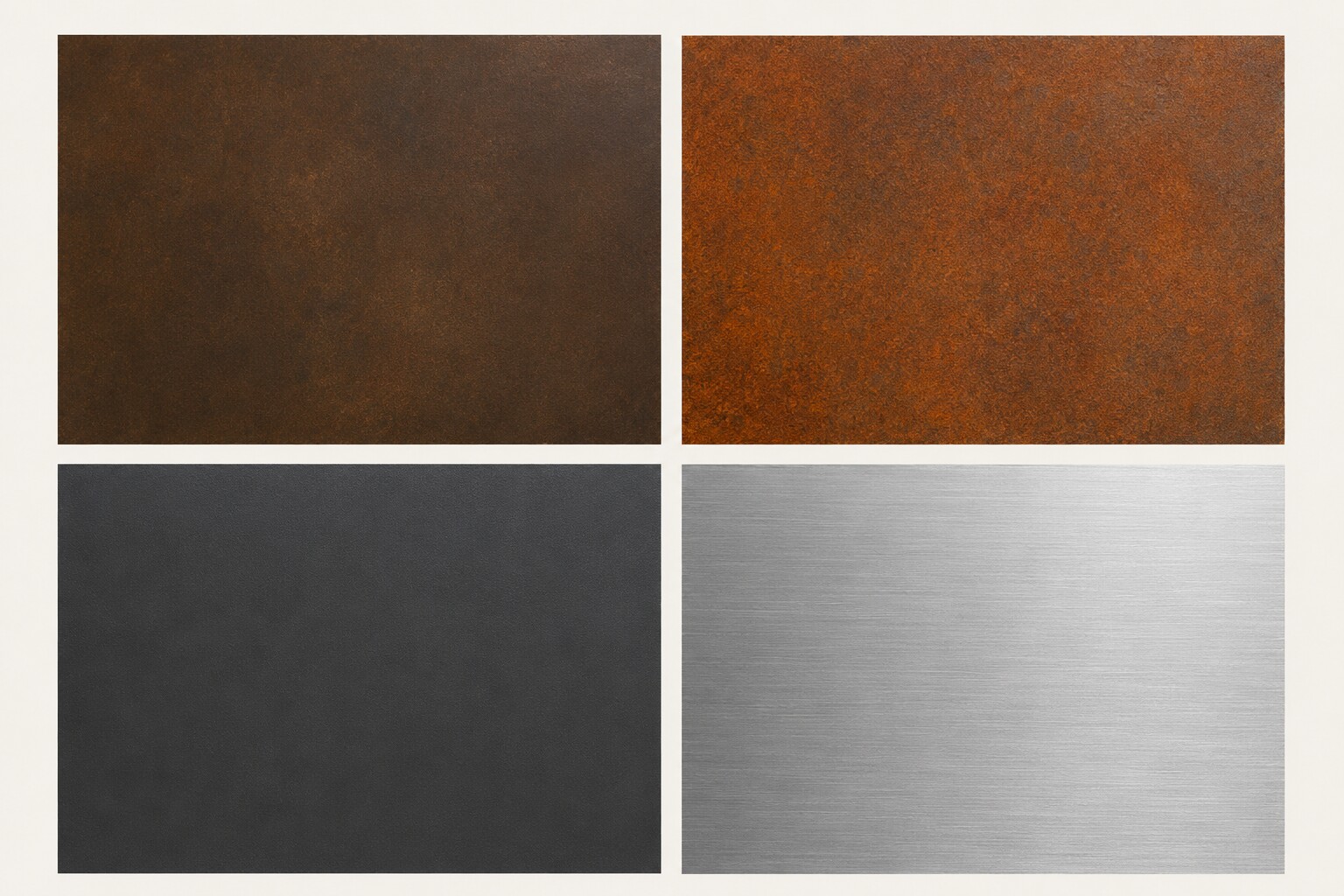
Illustrative Architectural bronze sample cropped from the metals, finishes & corrosion comparison board
Illustrative Architectural bronze study—not a named product, quarry, mill, approved finish, test specimen, or installed project.

How the five-point scale works

Higher means more confirmation—not better material.

The Registry uses this scale to show how much project-specific specification attention a factor deserves for Architectural bronze. It is an editorial planning framework, not a laboratory result or product certification. No factors are averaged into an overall grade.

Levels are assigned from two questions: how consequential an unresolved factor could be, and how specific the evidence must be before commitment. They do not predict service life or failure.

  1. 1Limited

    Confirm the standard submittal and installation requirements.

  2. 2Secondary

    Review the factor, but it is unlikely to control the decision by itself.

  3. 3Material

    Give the factor explicit project-specific specification attention.

  4. 4High

    Resolve the factor before approval because it can materially affect the result.

  5. 5Critical

    Require source-, product-, exposure-, or assembly-specific confirmation before commitment.

Specification-attention profile

What deserves attention for Architectural bronze.

Every score below belongs to the named factor for Architectural bronze. It does not describe the other examples in metals, finishes & corrosion.

  1. 4/ 5
    High attention

    Alloy and patina

    Registry rationale

    Commercial bronze descriptions can conceal alloy and finish differences that change color and weathering.

  2. 5/ 5
    Critical attention

    Runoff staining

    Registry rationale

    Copper-bearing runoff can mark porous stone, concrete, stucco, and other adjacent surfaces.

  3. 5/ 5
    Critical attention

    Galvanic pairing

    Registry rationale

    Fasteners, frames, anchors, and adjoining metals require deliberate compatibility or isolation.

  4. 3/ 5
    Material attention

    Maintenance expectations

    Registry rationale

    Natural patina, waxed, lacquered, or mechanically maintained finishes create different service plans.

Before approval

Verify the actual selection.

  • Alloy, finish process, sample, and acceptable patina range
  • Runoff path and protection of porous adjacent materials
  • Fasteners, anchors, frames, isolation, and drainage
  • Cleaning, touch-up, and long-term finish plan

Owner questions

Ask the project team.

  1. Which alloy and finish does the approved sample represent?
  2. Where can runoff reach stone or concrete?
  3. Which adjoining metals are isolated, and how?

Evidence and limits

Open supporting sources

These sources support the broader material-system principles. The five-point values are contractor-informed Registry editorial judgments under the published rubric; the sources do not assign those numbers. Current manufacturer literature, project specifications, source-specific test data, and local requirements must govern the actual selection.

Read the Registry methodology →
FHWA · Paint and Corrosion LaboratorySupports: Corrosion, protective-coating, salt, and exposure mechanisms for infrastructure metals.NIST · Infrastructure Materials GroupSupports: Research context for material degradation and infrastructure performance. It does not rank decorative metal choices.

Continue comparing

Specific material profileWeathering steelSpecific material profilePowder-coated aluminumSpecific material profileStainless steel