Colorado exterior material comparison · Reviewed August 2026
Best Pool-Deck Materials for Colorado Estates
Compare stone, exterior porcelain, and architectural concrete for Colorado pool decks: traction, freeze-thaw, drainage, heat, joints, and repair.
Direct answer
The best Colorado pool-deck material is the complete assembly that safely manages wet traction, freeze–thaw exposure, heat, movement, drainage, pool chemistry, deicers, edges, access, maintenance, and future repair. Natural stone offers authenticity but needs exact-source review; exterior porcelain can offer controlled appearance but requires a proven exterior support and joint system; architectural concrete offers continuity and flexibility but demands mixture, curing, joint, finish, and acceptance discipline.
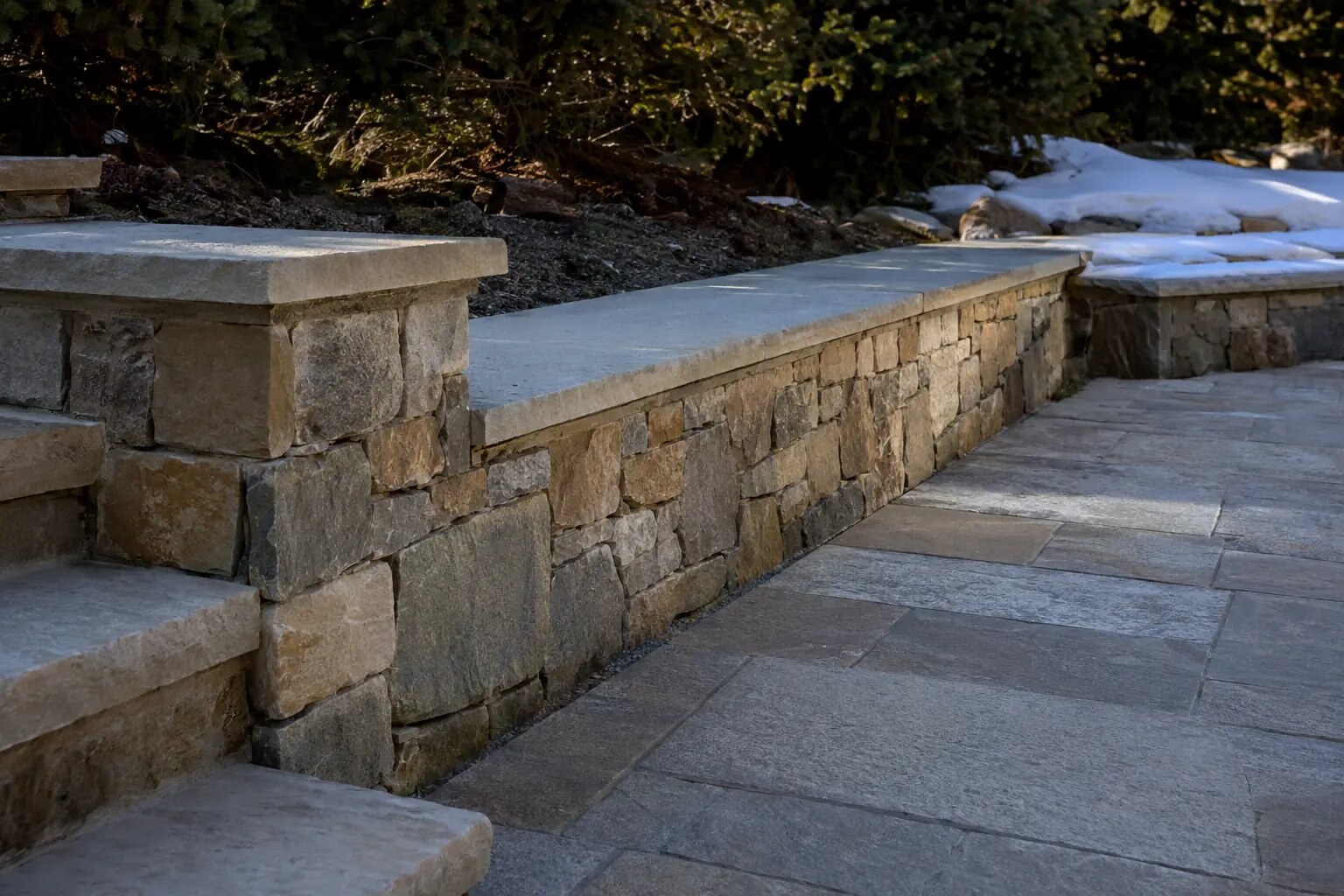
Illustrative natural stone exterior systems detail. Verify the selected product and assembly with the project team.
Alternative-by-alternative
What is each option best positioned to do?
These are planning distinctions. Verify the exact source, product, finish, assembly, exposure, installer, and warranty.
Option
Potential fit
Highest-attention questions
Natural stone
High-authenticity terraces and pool compositions
Source-specific durability, finish, thickness, setting or support, salts, drainage, joints, and replacement.
Exterior porcelain
Controlled palette, large formats, and pedestal or setting systems where approved
Exterior and wet-use rating, support, edge protection, lippage, joints, drainage, spare stock, and installer system.
Architectural concrete
Monolithic or unitized decks, custom geometry, and restrained contemporary settings
Mixture exposure, air system, curing, joints, cracking expectations, finish, traction, deicers, and repair standard.
Decision criteria
Compare the installed system—not the sample alone.
Criterion
Comparison
Owner action
Wet traction
Finish-specific, not material-name specific
Review wet, barefoot, slope, cleaning, and winter conditions.
Freeze–thaw
Control saturation, drainage, compatible setting systems, and exposure class
Require exact product and assembly documentation.
Movement and joints
Pool structure, deck, walls, and adjacent materials move differently
Coordinate isolation, movement, sealant, and drainage details.
Repairability
Every finish eventually needs cleaning, repair, or replacement
Keep records and spare units; approve visible repair expectations.
Before approval
Questions the project team should answer.
Which exact finish is approved for wet and winter circulation?
How does water move from the surface to a maintainable discharge?
Where are movement and isolation joints, and who owns them?
What will a realistic repair look like five years later?
These sources frame material-system behavior. They do not approve a product, assign the Registry's editorial comparison, or replace current manufacturer literature and project specifications.