Capital planning · Reviewed August 2026

How Much Does a Luxury Pool Cost in Colorado in 2026?

2026 Colorado luxury pool costs, included scope, common exclusions, site premiums, and $250K–$1M estate water-program planning models.

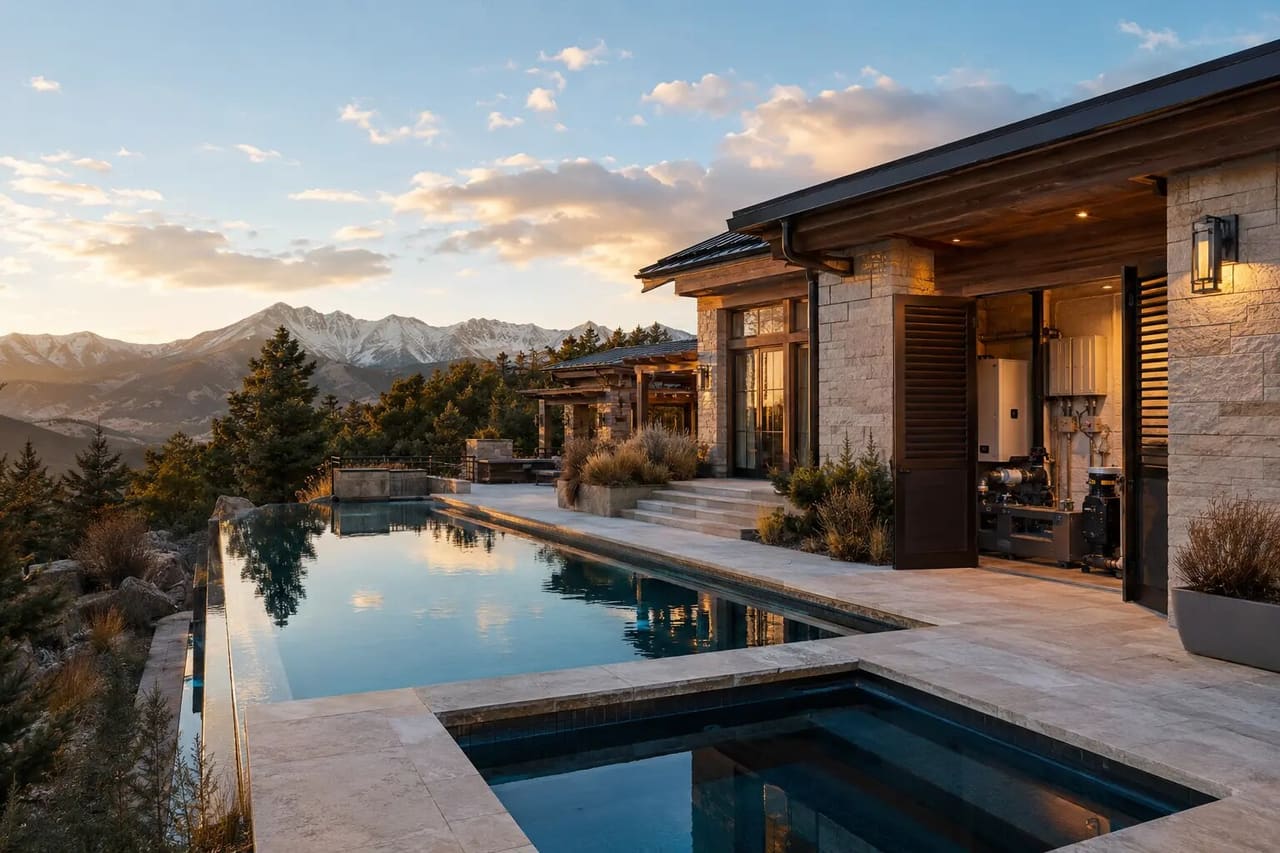
Illustrative Colorado pool and spa with a limestone terrace, native planting, and equipment access
Direct answer

Published 2026 Colorado benchmarks place standard fiberglass installations at average costs of $88,000 for a small pool, $104,000 for a medium pool, and $121,000 for a large pool. A Colorado design-build source places custom shotcrete pools at roughly $120,000–$175,000+ to start and integrated pool environments at about $200,000–$400,000+. Estate projects with major retaining, difficult access, a pavilion or pool house, premium terraces, mature landscape, and extensive utilities can exceed those ranges. The decisive question is what the quoted number actually includes.

Useful to a client, adviser, or project team?Share the source page so its dates, methods, and limitations stay attached.

Owner briefing

Three points to carry forward.

Illustrative Registry planning model

What can different estate water-program allocations reasonably prioritize?

Illustrative scope models only—not quotes. The parcel, design, engineering, approvals, access, and finishes control the actual result.

Illustrative allocationProtect firstLikely owner decision
Around $250,000A complete custom pool or integrated pool-and-spa setting with defined sitework, utilities, safety, deck, drainage, and essential landscapeLimit major architecture, extensive retaining, or secondary amenities unless the site is unusually straightforward
Around $500,000A fully composed water environment with stronger terraces, landscape, lighting, privacy, automation, and room for selected structural or shade elementsChoose whether a pavilion, difficult-site work, or premium material program receives the next major allocation
Around $1 millionAn estate-scale composition that may combine water, substantial architecture, premium hardscape, mature landscape, utilities, controls, and project deliveryProtect design, engineering, hidden infrastructure, reserve, and commissioning before multiplying features

Published Colorado benchmarks

What do current Colorado pool-cost sources actually report?

The rows below use different products and inclusions. They establish planning context; they are not interchangeable bids or Registry price guarantees.

Planning levelPublished 2026 benchmarkScope represented
Standard fiberglass installation$88K small · $104K medium · $121K large averagesDealer-survey averages that typically include the shell, excavation, basic equipment and plumbing, basic electrical, permits, one light, initial fill, dirt hauling, and about three feet of concrete deck; packages vary
Custom shotcrete pool$120K–$175K+ starting rangeA Colorado design-build market benchmark for a custom vessel; exact equipment, decking, utilities, sitework, and finishes vary
Integrated pool environment$200K–$400K+ common rangeA Colorado design-build benchmark including decking, structural support, lighting, and landscape coordination, subject to site and scope
Complete estate water compoundProperty-specific; may exceed published rangesPool or spa plus difficult earthwork, retaining, extensive utilities, premium stone, pavilion or pool house, mature landscape, furnishings, and commissioning

Benchmarks checked August 11, 2026. Always compare written inclusions, exclusions, allowances, quantities, and site assumptions.

01

What does a Colorado pool quote usually include?

A responsible quote should define the vessel, excavation, structure, hydraulics, equipment, plumbing, electrical, gas or heat assumptions, permits, basic decking, start-up, and commissioning. Published fiberglass packages commonly include a narrow band of concrete deck; they do not imply that the complete estate setting is included.

What belongs to the core pool system?

Shell or shotcrete structure, reinforcement, interior finish, coping interface, circulation, filtration, sanitation, heating assumptions, controls, drains, lights, cover provisions, start-up, and required inspections should be named rather than bundled as ‘pool.’

What belongs to the surrounding estate?

Expanded terraces, architectural walls, drainage, planting, irrigation, privacy, lighting, furniture, outdoor kitchens, fire, pavilions, pool houses, and whole-property restoration are separate scope unless the proposal explicitly includes them.

02

What pushes a Colorado pool beyond the published range?

The largest premiums often come from the property rather than the waterline. Rock, expansive soils, grade, groundwater, retaining, long utility runs, crane access, spoil removal, mature-tree protection, occupied-home logistics, and premium architectural integration can each change the capital plan.

How do soil, slope, and access change cost?

A survey, geotechnical input where appropriate, test excavation, access plan, and preliminary grading and retaining concept expose conditions that a standard pool allowance cannot carry responsibly.

How do architecture and materials change cost?

A vanishing edge, raised spa, custom waterline, stone terrace, pavilion, equipment room, extensive glazing, or concealed cover system creates structural, waterproofing, utility, finish, and coordination obligations beyond the vessel.

03

What is commonly excluded from a luxury pool proposal?

Owners should assume nothing. The most consequential omissions are often outside the pool contractor’s narrow trade scope, yet they are necessary for a finished and operable environment.

  • Survey, architecture, landscape architecture, civil, structural, geotechnical, and specialty engineering
  • Rock handling, unsuitable-soil correction, dewatering, export, retaining, shoring, and difficult access
  • Utility upgrades, long gas or electrical runs, transformers, meters, generator impacts, and data integration
  • Expanded decks, premium stone, railings, fencing, gates, landscape, irrigation, lighting, furnishings, and restoration
  • Pool house or pavilion structure, kitchen equipment, bathrooms, ventilation, fire features, audio, and automation beyond the pool controls
  • Permit-review overages, association review, winter protection, owner contingency, and first-year service
04

How should an owner compare two pool proposals?

Normalize the proposals into the same scope matrix before comparing totals. A lower number may simply transfer earthwork, utilities, deck, barriers, engineering, landscape, controls, or commissioning to someone else.

Which quantities and allowances must be visible?

Ask for pool dimensions, deck area, wall quantities, utility lengths, finish levels, equipment schedule, lighting count, cover type, landscape limits, permit assumptions, and named allowances with unit or replacement-cost logic.

Who owns every interface?

Assign responsibility for coping-to-deck joints, pool-to-retaining structure, waterproofing, deck drainage, equipment ventilation, gas and electrical capacity, control integration, barrier compliance, landscape restoration, and final testing.

05

What should be resolved before requesting a fixed pool price?

Before a fixed commitment, the team should know the survey and approval context, pool program, preliminary location and elevations, access strategy, structural assumptions, utility path, equipment concept, deck and landscape limits, and the owner’s expectations for year-round appearance and operation.

  • Confirm the parcel, setbacks, easements, association controls, and permit path
  • Define swimming, spa, wellness, entertaining, cover, barrier, and seasonal-use requirements
  • Test grade, drainage, soils, rock, groundwater, retaining, access, and spoil handling
  • Coordinate architecture, landscape, structure, hydraulics, equipment, utilities, acoustics, and service access
  • Carry owner-controlled contingency until hidden conditions and selections are better defined

Direct owner answers

Frequently asked questions.

How much does a luxury pool cost in Colorado in 2026?

Published Colorado benchmarks range from average standard fiberglass installations of $88,000–$121,000 by size to custom shotcrete starting around $120,000–$175,000+ and integrated environments commonly around $200,000–$400,000+. A complete estate water compound can exceed those ranges when it includes difficult sitework, major architecture, premium hardscape, landscape, and utilities.

Is a pool house or pavilion included in the pool price?

Usually not unless it is explicitly designed, permitted, and priced in the same proposal. A pool house or pavilion brings its own structure, foundation, utilities, enclosure, kitchen or bathroom systems, finishes, approvals, and professional services.

Why can two Colorado pool bids be far apart?

They may assume different pool types, equipment, deck areas, finishes, site conditions, utility lengths, barriers, engineering, exclusions, allowances, and responsibility for the surrounding landscape. Normalize scope before comparing totals.

What is the most overlooked pool-budget risk?

The interfaces outside the vessel—earthwork, retaining, drainage, utilities, access, decks, structures, landscape restoration, and commissioning—are frequently underestimated or assigned to no one.

Sources and benchmarks

What each source actually supports.

These references support specific regulations, hazards, planning principles, or clearly labeled published market benchmarks—not feasibility or a fixed price for one property. Open the current source and verify its date, inclusions, parcel, scope, and authority before relying on a planning assumption.

  1. Thursday Pools2026 Colorado Fiberglass Pool Cost SurveySupports: Manufacturer-published 2026 Colorado dealer-survey averages and stated standard-package inclusions; not an independent bid or estate-scale cost guarantee. (opens in a new tab)
  2. Waymark Outdoor DesignColorado Custom Inground Pool Cost GuideSupports: A Colorado design-build firm’s 2026 starting ranges for custom shotcrete pools and integrated pool environments; inclusions and property conditions vary. (opens in a new tab)
  3. Colorado Geological SurveyExpansive Soil and RockSupports: The presence and consequences of expansive soil and rock hazards in Colorado; not site-specific geotechnical values. (opens in a new tab)
  4. Denver WaterTips to Save Water with Swimming Pools and SpasSupports: Water-conservation practices for pools and spas; not pool pricing, design, or code compliance. (opens in a new tab)

Private assessment

Ready to define the builder your property requires?

Begin registry review