Estate architecture · Reviewed July 2026
Pool House vs. Pavilion: Which Does a Colorado Estate Need?
A functional comparison of open pavilions, pool houses, cabanas, garden rooms, and conditioned accessory structures.
Illustrative registry study Direct answerChoose the structure by the jobs it must perform. A pavilion primarily provides sheltered outdoor living; a pool house may add changing, bathroom, equipment, storage, service, or conditioned functions. The correct answer depends on seasonality, privacy, utilities, code, maintenance, and relationship to the residence.
01Define the operating program
List dining, cooking, lounging, changing, bathing, storage, equipment, bar service, television, work, guest overflow, winter use, and staff or event needs. Then identify which functions require enclosure, privacy, conditioning, plumbing, or daily service.
02Open pavilion
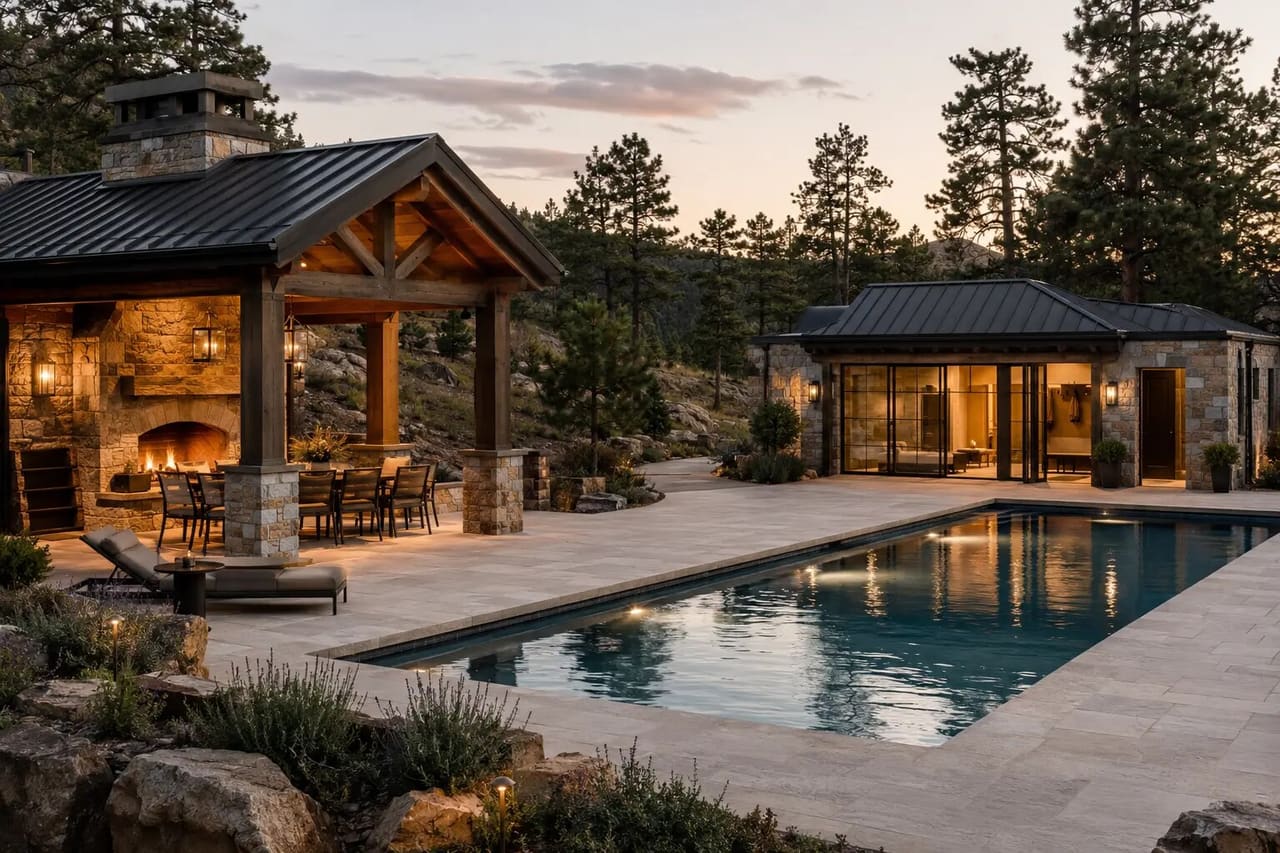
An open structure can provide shade, rain protection, heating, fireplace, kitchen, dining, lighting, audio, and strong landscape connection. Wind, smoke, snow, insects, shoulder seasons, and secure storage still require design responses.
03Pool house or garden room
Enclosed or conditioned space can support bathrooms, changing, mechanical rooms, storage, hospitality, and year-round use. It also introduces envelope, energy, ventilation, moisture, freeze protection, life safety, and additional approval considerations.
04Site and architectural fit
Views, sun, prevailing wind, roof form, scale, stone or material language, pool geometry, service route, neighboring exposure, mature trees, and the main residence should determine placement and form.
05Plan for service
Trash, towels, food, glassware, cushions, pool chemicals, equipment access, deliveries, cleaning, winter shutdown, security, and guest circulation often reveal whether a beautiful concept will function comfortably.